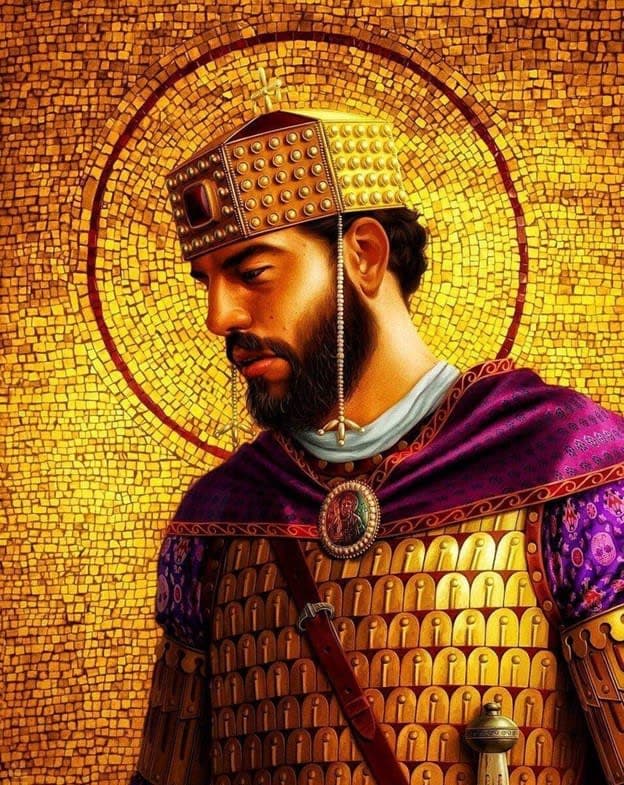
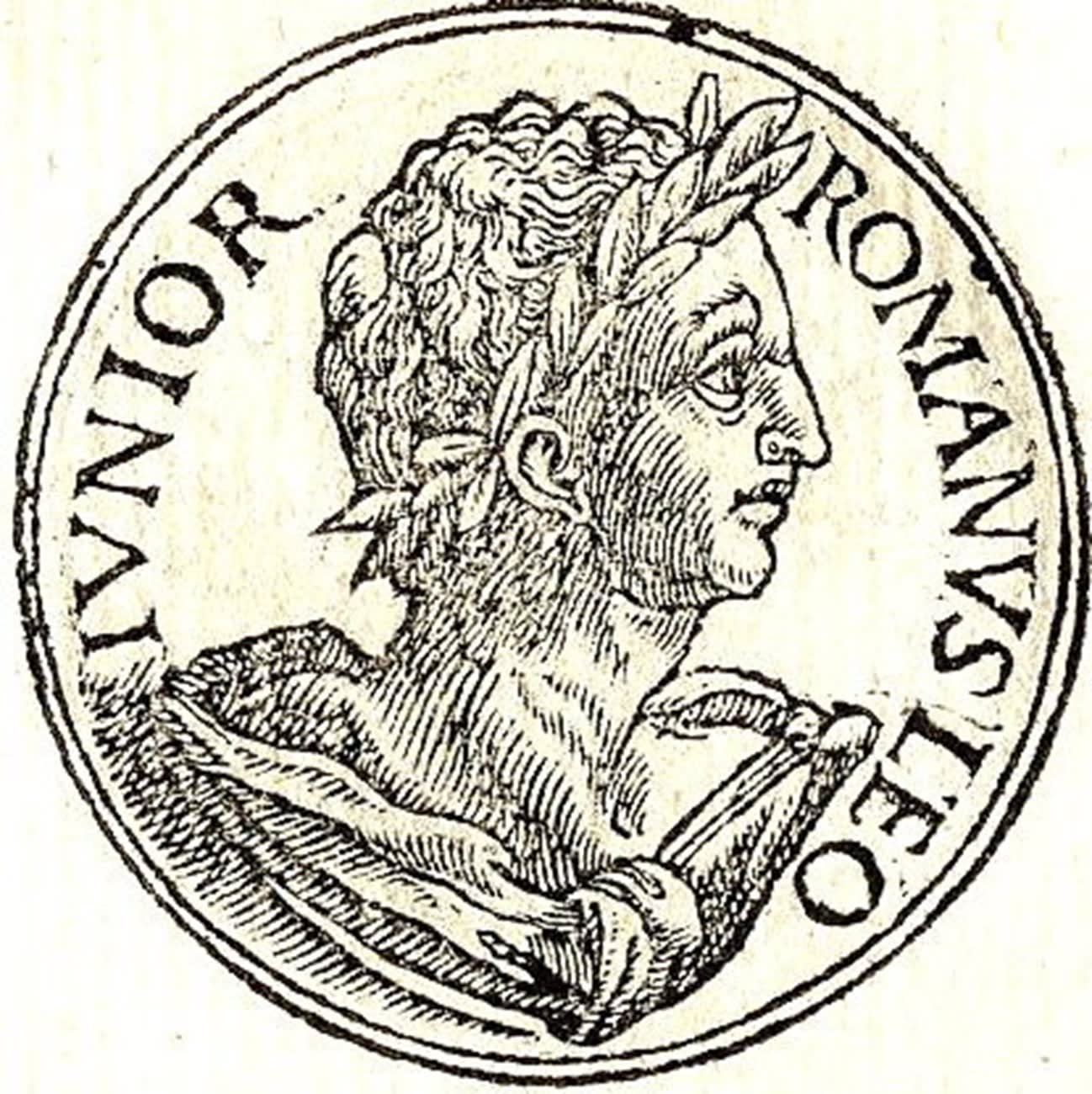
Basil was born in 958 in the very heart of the empire — Constantinople, although some chronicles point instead to Didymoteichon in Thrace. He was the son of Emperor Romanos II and Theophano, the daughter of a simple tavern-keeper whose beauty and ambition had raised her to the throne. On his father’s side, Basil had Armenian blood, and his grandfather was the great scholar Constantine VII Porphyrogenitus.
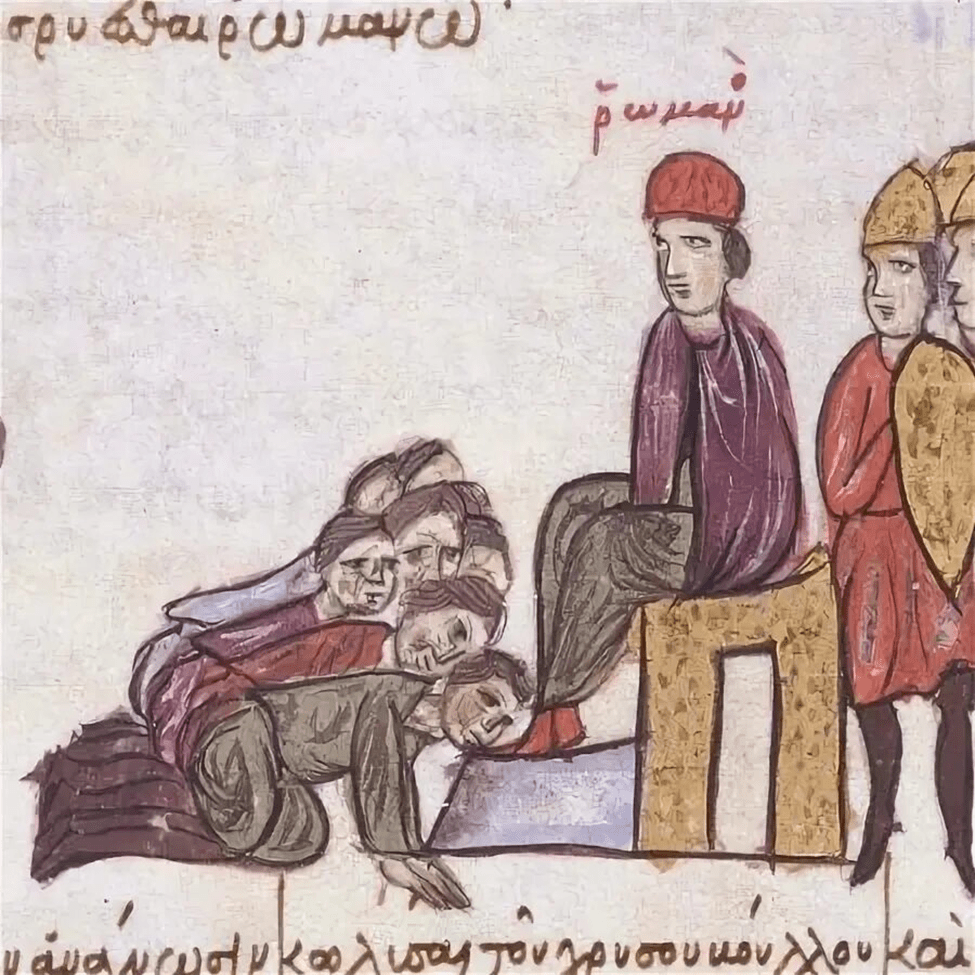
Basil’s childhood was far from peaceful. When his father died suddenly in 963, Basil and his brother Constantine VIII were left as underage heirs under the regency of their mother. Real power, however, quickly passed from hand to hand: first to the stern military commander Nikephoros Phokas, who married Theophano, and then to John Tzimiskes, who murdered his predecessor in 969. All this time the brothers remained only formal figures, while behind them their great-uncle, the powerful eunuch and parakoimomenos Basil Lekapenos, wove intrigues.
After the death of Tzimiskes in January 976, the eighteen-year-old Basil officially ascended the throne, but at first he remained in the shadow of Lekapenos. The first decade of his reign became an unbroken struggle for the very survival of the dynasty. The military aristocracy of Asia Minor rose against the “purple-born boys.”
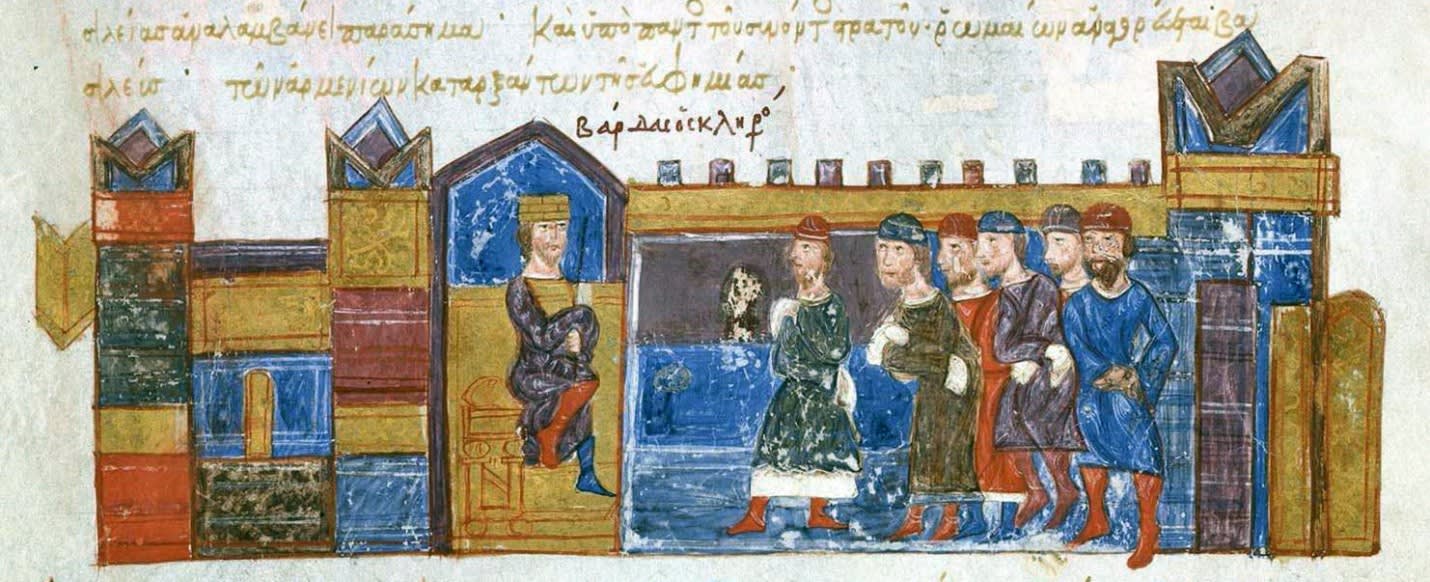
The first to challenge him was Bardas Skleros in the summer of 976. His army advanced rapidly toward the capital, and only thanks to the help of the Phokas family and the talent of Bardas Phokas the Younger was the revolt suppressed in May 979. Skleros fled to the Arab emirs in Baghdad, becoming a valuable pawn in eastern diplomacy.
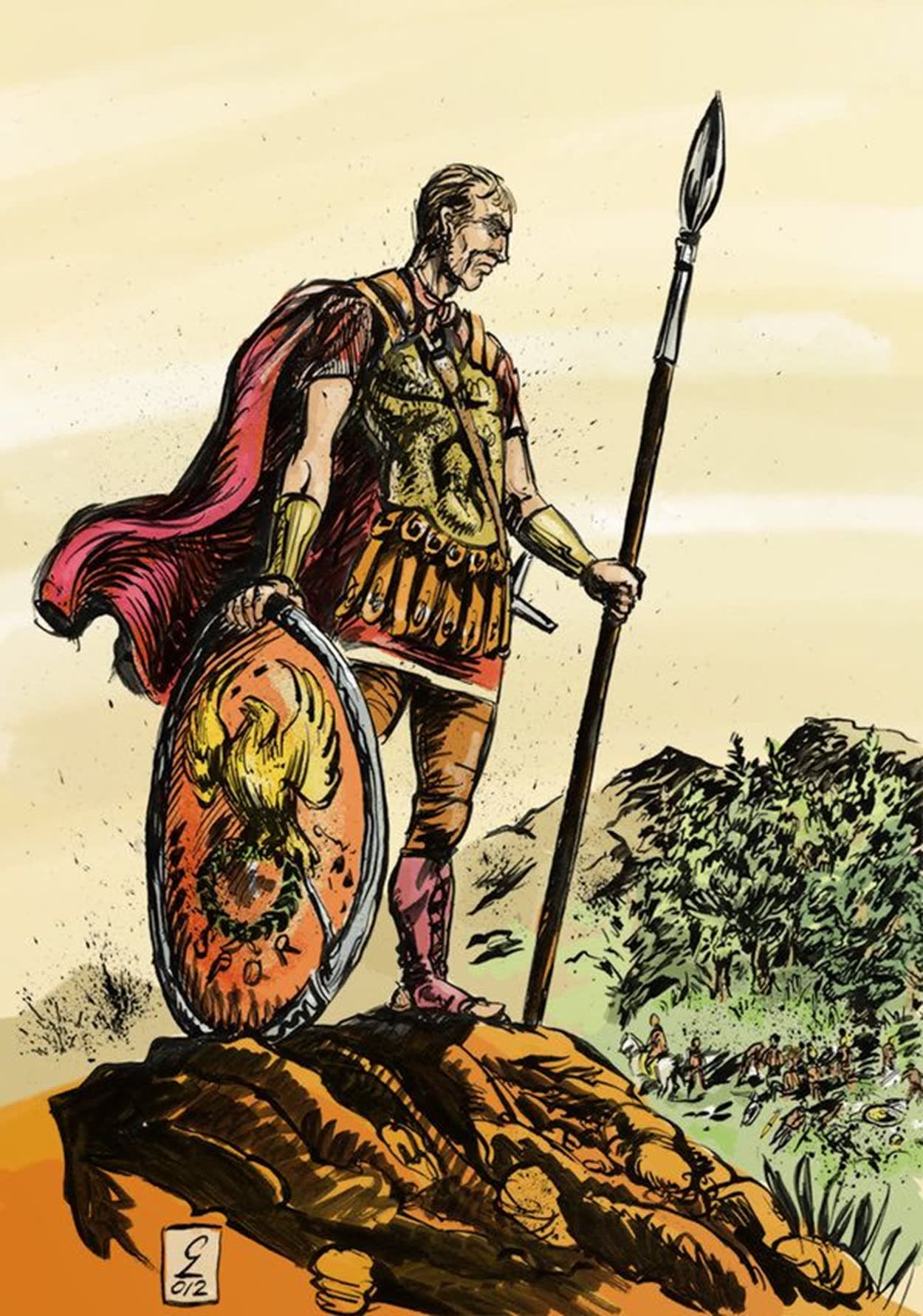
The decisive turning point came in 985, when Basil II, tired of living under his great-uncle’s control, decisively overthrew Basil Lekapenos. The emperor’s hostility was so deep that he annulled all decrees issued during their joint rule. Yet independence began with catastrophe: in 986, at the Battle of the Gates of Trajan, the Bulgarian tsar Samuel utterly defeated the Byzantines, and Basil himself escaped captivity only by a miracle. This failure provoked a second wave of civil war: Bardas Phokas, sent against the returned Skleros, proclaimed himself emperor in turn.
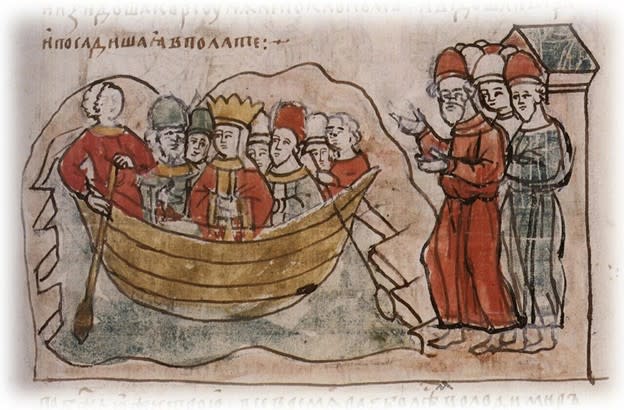
Surrounded by enemies, Basil II carried out one of the most significant diplomatic maneuvers in world history. In 988, he turned for help to Prince Vladimir Sviatoslavich of Kiev. The price of the alliance was the hand of the emperor’s sister Anna — an unheard-of concession for Byzantium, which had never before given a purple-born princess in marriage to a “barbarian.”
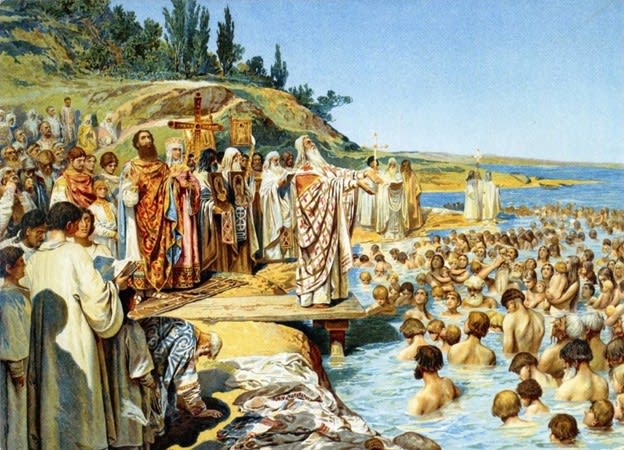
Vladimir fulfilled the terms: he accepted baptism, taking the name Basil in honor of the emperor, dismissed his harems, and destroyed the pagan idols. A detachment of six thousand Rus’ warriors arrived in Byzantium and became the core of the famous Varangian Guard. With their help, Basil crushed the rebels at Chrysopolis and Abydos in 989. The Christianization of Rus’ forever drew the eastern Slavs into the political and cultural orbit of Constantinople.
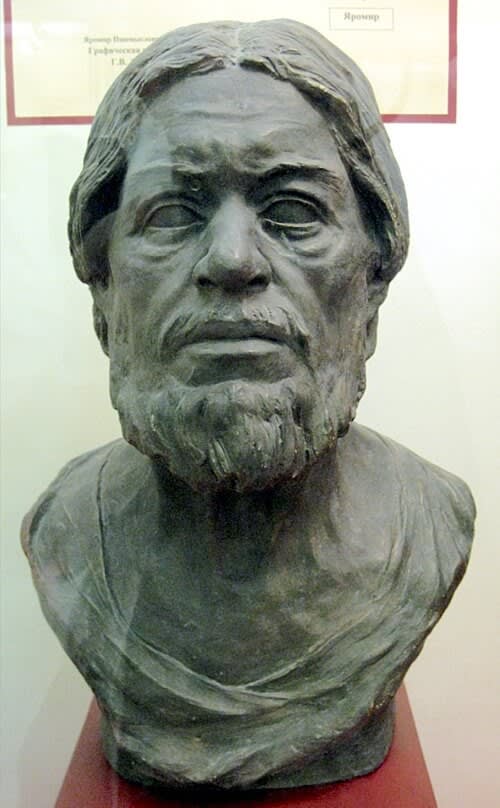
Having pacified the empire, Basil devoted the rest of his life to his principal goal — the complete destruction of the Bulgarian kingdom. This was a war of attrition lasting almost forty years. Tsar Samuel created a powerful state in Macedonia, restored the patriarchate, and threatened Thrace.
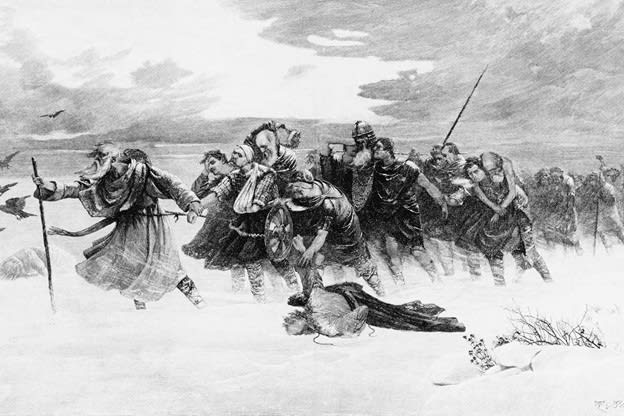
Basil acted methodically, recapturing fortress after fortress year by year. The climax came in 1014 at the Battle of Kleidion, also known as the battle at Belasitsa on the Strymon. The Byzantines captured 15,000 Bulgarian soldiers. By Basil’s order, all of them were blinded; in every hundred, only one man was left with a single eye so that he could lead the others home. It is said that when Samuel saw his returning army, he died of shock. In 1018, Bulgaria finally became a Byzantine theme. It was for this merciless act that Basil received the surname Bulgar-Slayer.
Basil did not confine himself to the Balkans. He also actively strengthened Byzantine positions in the East:
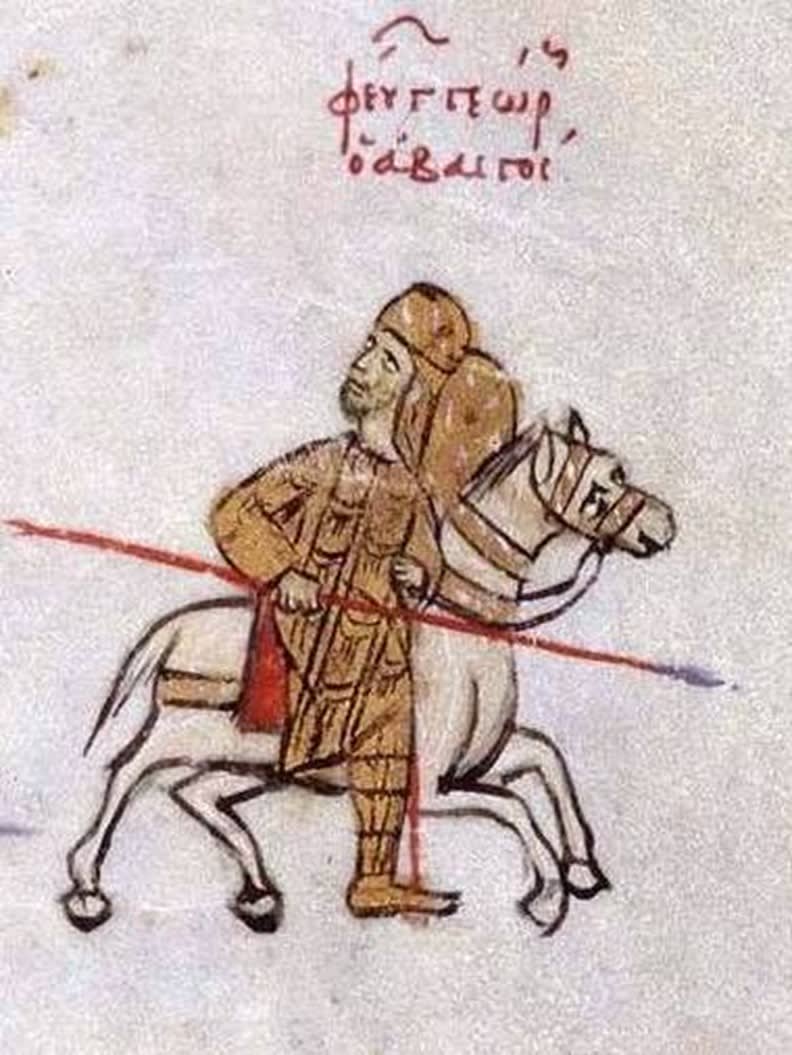
In 1021–1022, he defeated George I, king of Iberia, and secured the Treaty of Trebizond, under which the Armenian kingdom of Hovhannes-Smbat was bequeathed to Byzantium. Armenian historians even called him the “Father of the Armenian Land,” although the later annexation of these territories destroyed the buffer zone against nomadic invasions.
In 992, Basil granted the Venetians exclusive trading privileges in exchange for the support of their fleet. This allowed the empire to maintain its footholds in southern Italy and fight piracy.
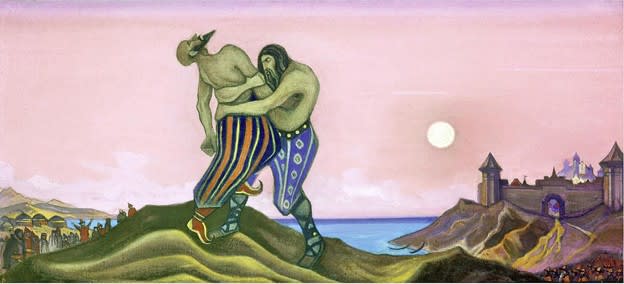
In 1016, the Byzantines together with Mstislav the Brave, prince of Tmutarakan, defeated the last Khazar ruler, George Tzul, in Crimea.
Basil’s internal government was as harsh as his military rule. He hated the great landed aristocracy, the dynatoi, whose rebellions had nearly cost him his throne. To weaken them and fill the treasury, the emperor introduced the allelengyon — a law under which wealthy landowners were obliged to pay taxes on behalf of poor peasants and on abandoned lands belonging to their neighbors. This enabled enormous sums of gold to be amassed in the palace vaults, securing the empire’s greatness for years to come.
Basil II was a unique figure among Byzantine monarchs. He completely rejected luxury, wore no jewels, and had no interest in scholarship or the arts. His home was the army, and his clothing was a soldier’s armor.
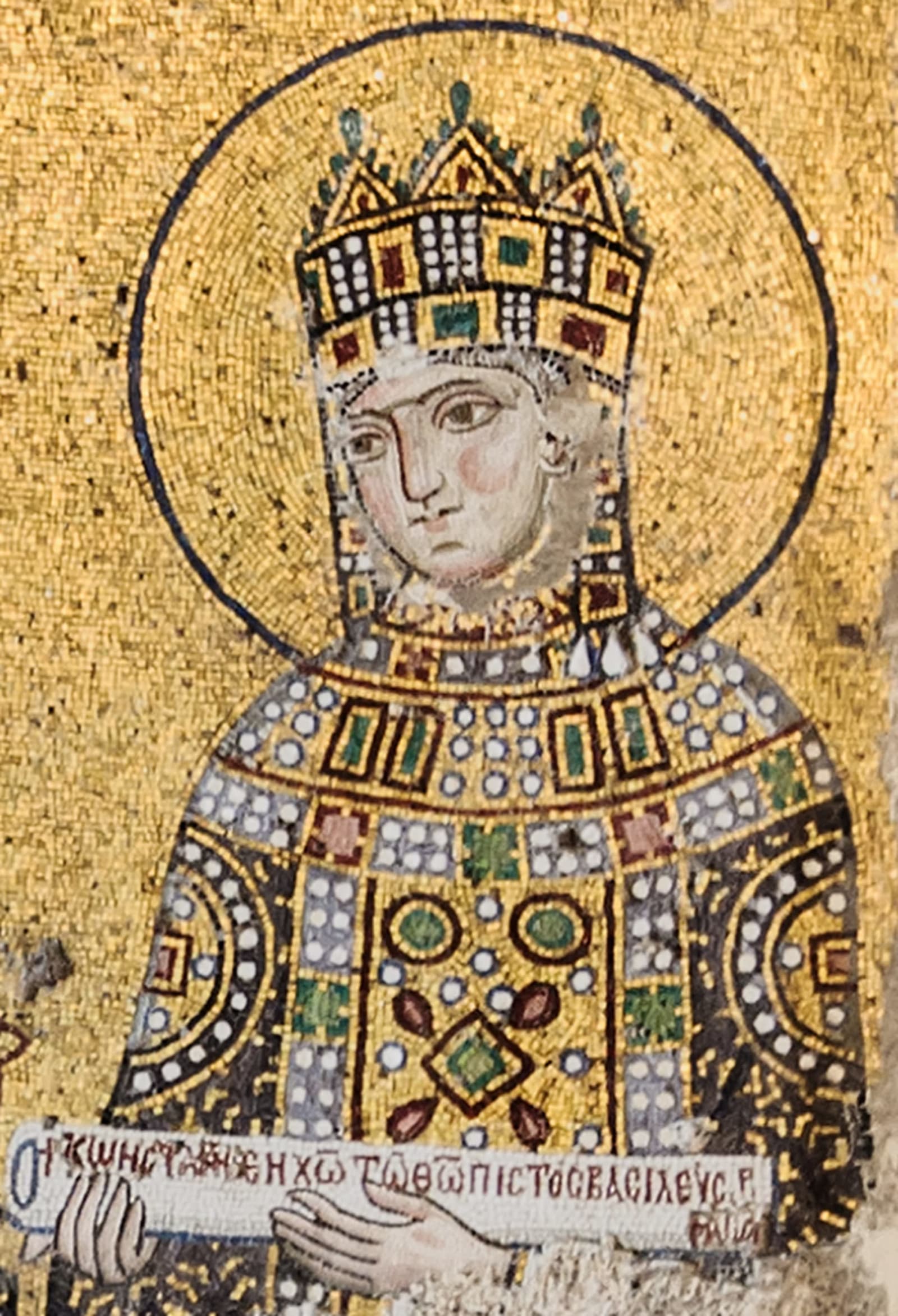
The most mysterious fact of his life remains his total celibacy. Basil never married, and there are no known children or lovers. More than that, he did not marry off his nieces, Zoe and Theodora, daughters of Constantine VIII, while they were still of childbearing age. This decision proved fatal: by leaving no direct heir, the great emperor doomed the Macedonian dynasty to decline and the empire to a period of civil strife immediately after his death.
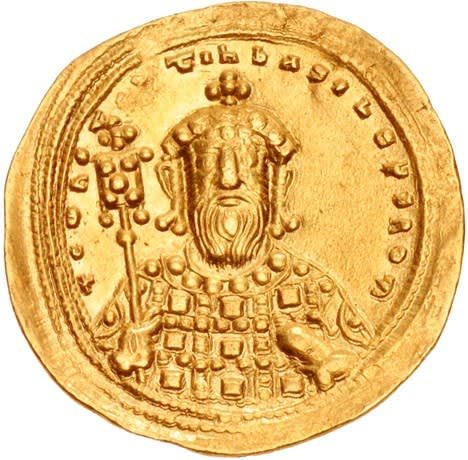
Basil II died in 1025 while preparing a campaign against Sicily. He left to his brother Constantine VIII an empire that was vast, wealthy, and stable. Yet, as Jean-Pierre Mahé notes, by destroying the independence of Armenia and failing to secure the succession, Basil unwittingly opened the gates to future disasters. His reign became the “swan song” of great Byzantium — behind the dazzling brilliance of victory there already lay the shadows of decline, born of the loneliness and despotism of the “Iron Emperor.”


