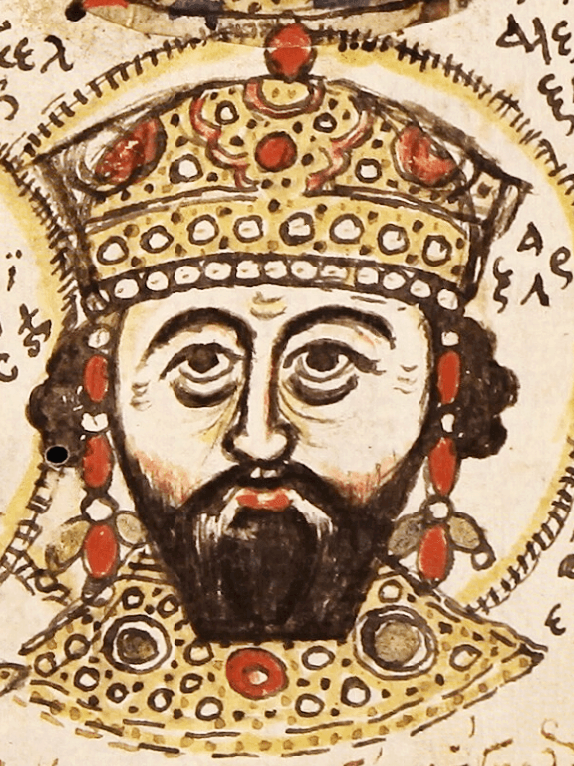
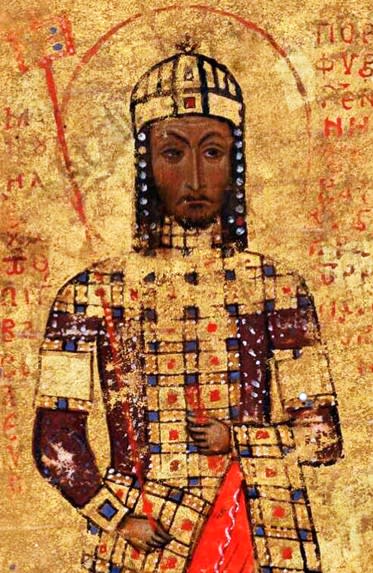
The history of the Angelos dynasty, which rose to the summit of Byzantine power at the end of the twelfth century, begins with the Sicilian admiral Constantine Angelos. His marriage to Theodora, the youngest daughter of the great emperor Alexios I Komnenos, laid the foundation for the family’s legitimacy. One of the prominent representatives of this family was Alexios III, the son of the Asia Minor commander Andronikos Doukas Angelos and the noble Euphrosyne Kastamonitissa. Later, seeking to emphasize his connection with the celebrated dynasty of his ancestors through the maternal line, he officially added the name Komnenos to his surname, entering history under the full name Alexios III Angelos Komnenos.
Alexios’ path to power began in one of the darkest periods of Roman history. On September 24, 1180, Emperor Manuel Komnenos died, leaving the throne to his underage son Alexios II. The empire was overwhelmed by a struggle for the regency between the “Latin” party of the widow Maria of Antioch and the “patriotic” faction, which feared the dominance of foreigners.
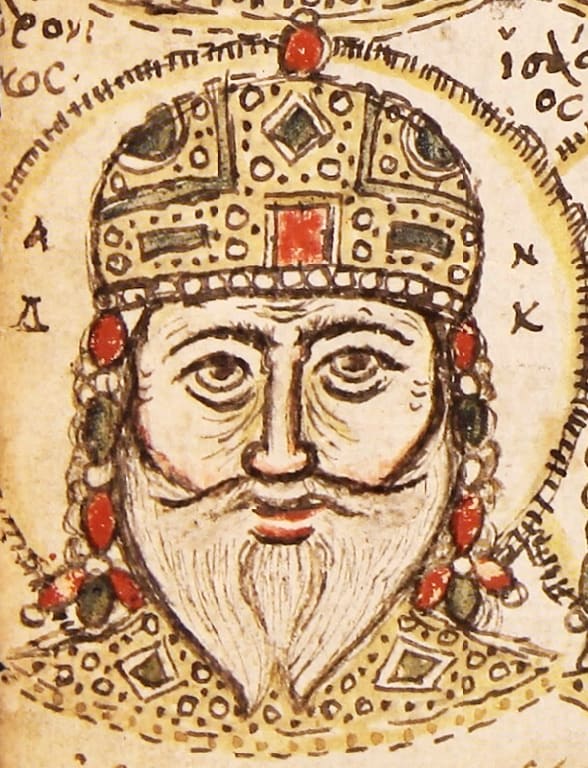
In the spring of 1182, the cousin of the late Manuel — Andronikos Komnenos — entered the political arena. Troops under the command of Alexios’ father, Andronikos Angelos, were sent against him. However, the commander, having squandered the treasury entrusted to him, made a fatal choice after his defeat at Charax: together with his six sons, he went over to the rebel’s side. Andronikos Komnenos greeted them with a Gospel quotation: “Behold, I send My angel before Thy face...,” seeing in this a sign from above. Soon, after the fall of the protosebastos Alexios Komnenos and the massacre of the Latins, Andronikos entered Constantinople.
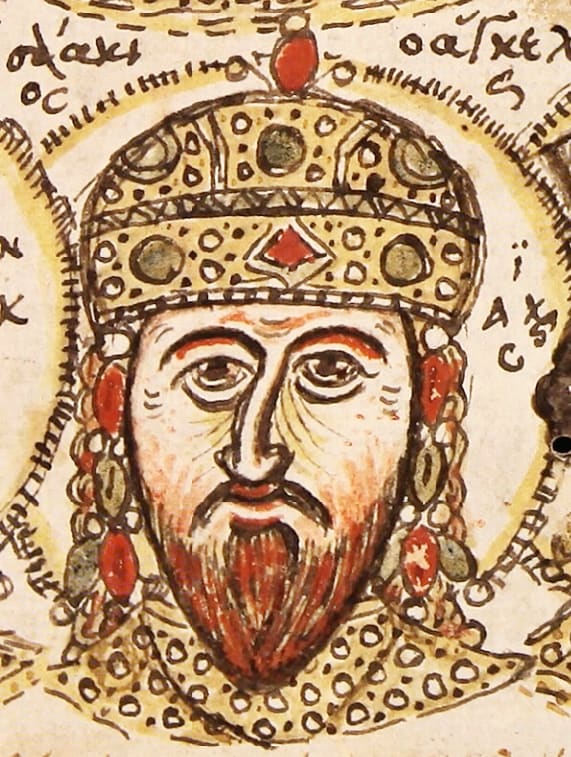
A period of terror began. Having become co-emperor in September 1183, Andronikos I Komnenos soon ordered the young Alexios II to be strangled with a bowstring and had his mother executed. In 1183, Alexios Angelos, together with his family, attempted a conspiracy against the tyrant, but failed and was forced to flee to Palestine. Only in 1185 did his younger brother Isaac manage to overthrow Andronikos and take the throne. Alexios himself returned from exile — according to some accounts, from Muslim captivity, from which his brother ransomed him — only in 1190.

While serving his brother-emperor, Alexios received the high title of sebastokrator. He actively participated in suppressing internal threats, in particular the struggle against False Alexios — an impostor who claimed to be the murdered son of Manuel Komnenos. This “Threshing-Floor Burner,” as the people nicknamed him for setting fire to peasants’ threshing floors, managed to gather an 8,000-strong Seljuk army and capture a number of towns in the Maeander valley. Only the accidental death of the impostor at the hands of a priest in 1195 put an end to the rebellion. Looking at the enemy’s severed head, Alexios remarked with irony: “Not entirely without reason did cities surrender to this man!”
However, the ambitions of the sebastokrator proved stronger than brotherly loyalty. In March 1195, Emperor Isaac II set out on a campaign against the Bulgarians. On the way, in the town of Rhaedestus, a local holy fool named Vasiliushka predicted disaster for the emperor, furiously scratching out the eyes on his portrait. Isaac paid no attention to this, but the prophecy came true on April 8, 1195, at Kypsela. While the emperor was hunting, the nobility proclaimed Alexios ruler. Isaac was seized in Thrace, blinded, and thrown into a prison in the capital.
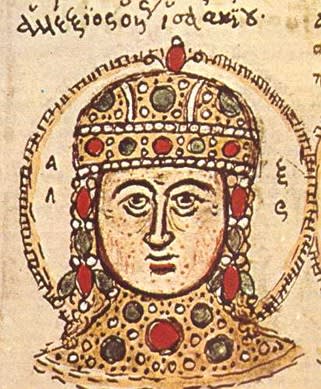
Having seized the throne, Alexios III plunged into a whirlpool of state concerns that demanded enormous funds. He began his reign with generous distributions of gold and titles to his supporters. However, his reforms drowned in corruption. The emperor signed any decrees without looking at them: “to plough the sea and move the mountains into the middle of the sea.” His wife, Euphrosyne Doukaina Kamatera, played a huge role in government, effectively sharing the throne with him and receiving foreign envoys.
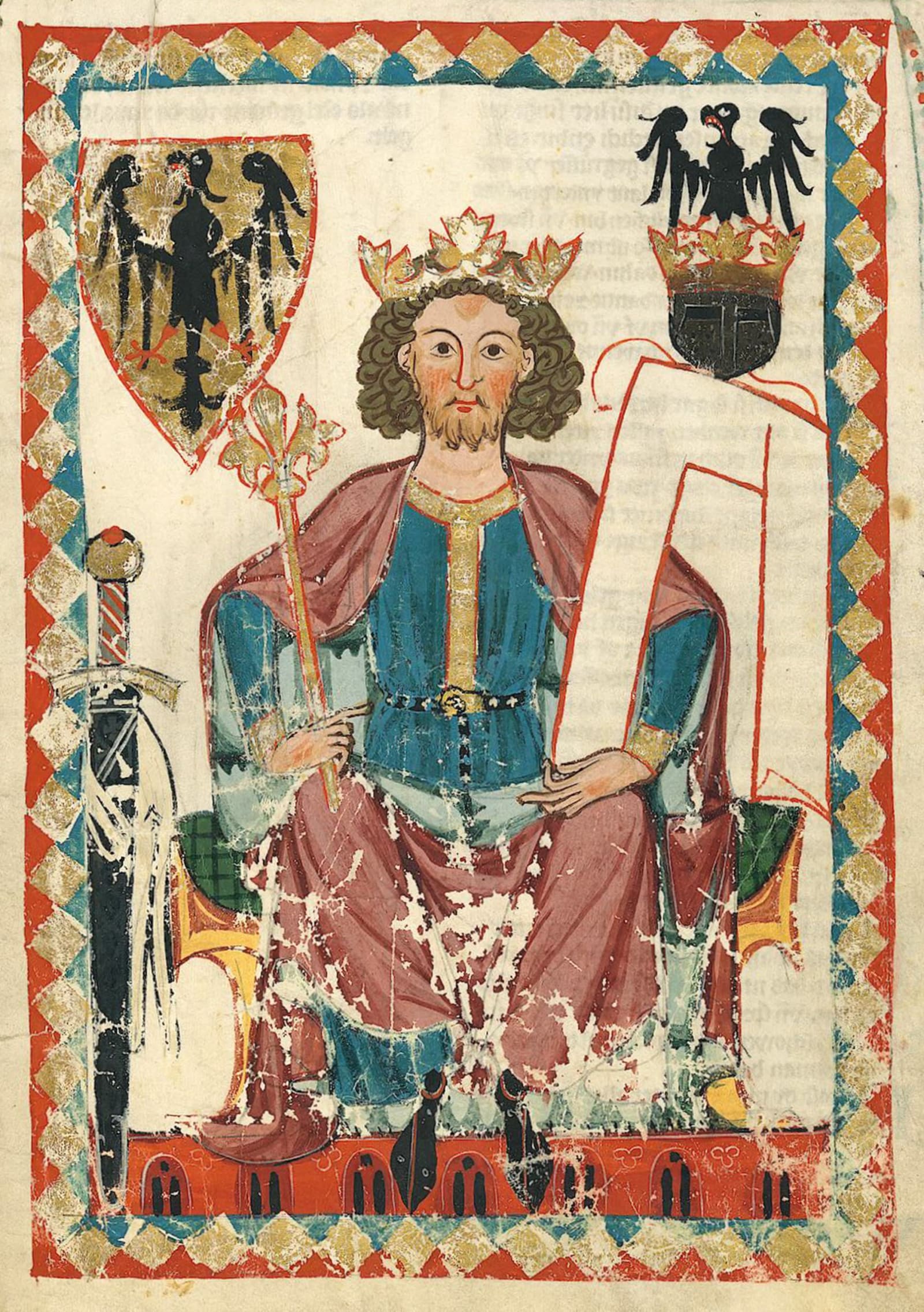
The empire’s foreign policy under Alexios III was a series of compromises and humiliations. In 1194, the German emperor Henry VI demanded huge payments — first 50, then 16 kentenaria of gold. To collect this money, Alexios introduced the “German tax,” the Alamanikon, for the sake of which imperial tombs in the Church of the Holy Apostles had to be robbed. Only Henry’s sudden death in 1197 saved the empire from further ruin.
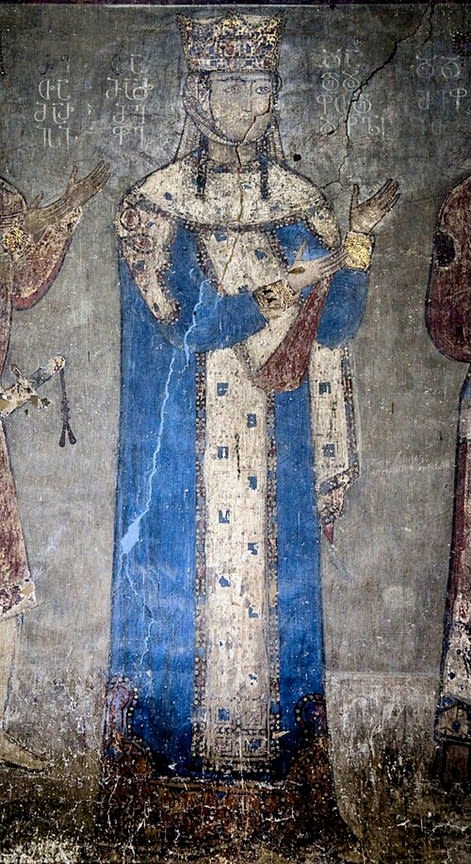
In the East, Byzantium tried to maneuver in its relations with the Seljuks. Alexios III even adopted the fugitive sultan Kaykhusraw I, who would later regain his throne in Konya. In the north, however, the situation was critical. The Bulgarian Empire under Kaloyan inflicted painful blows on the empire. Despite the peace concluded in 1201, Kaloyan eventually recognized the supremacy of the Pope of Rome, finally removing Bulgaria from the orbit of Byzantine influence. Relations with the Kingdom of Georgia also deteriorated after Alexios III ordered the gifts of Queen Tamar to the monasteries of Athos to be plundered. This gave the brothers Alexios and David Komnenos, with the support of Georgian troops, a pretext to seize Trebizond in 1204.
The reign of Alexios III was woven from rebellions. In Constantinople itself, the lawlessness of the prison chief John Lagos led to a popular riot and the destruction of the prison. In 1201, the aristocrat John “the Fat” Komnenos seized the cathedral of Hagia Sophia and proclaimed himself emperor, but he was soon killed, and his head was displayed in the square for the amusement of Alexios III. Separatism tore the empire apart: the uprisings of Ivanko and Dobromir Chrysos in Macedonia and Thessaly forced the emperor to make shameful concessions.
The end of his reign was brought by the shadow of the past. In 1202, the son of the blinded Isaac II — the young Alexios, the future Alexios IV — fled to Europe. He managed to reach an agreement with the participants of the Fourth Crusade, promising them enormous sums and the submission of the Byzantine Church to Rome in exchange for the restoration of his throne.
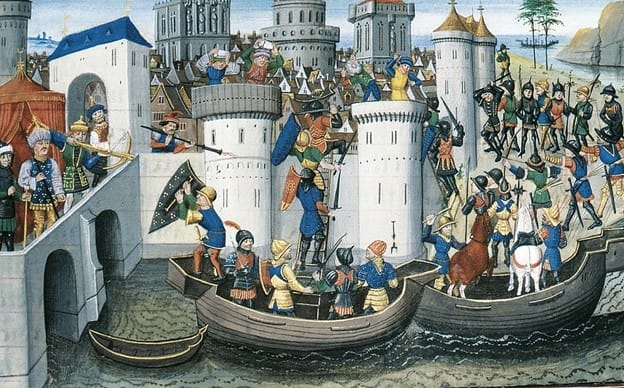
In June 1203, the Crusader fleet approached the walls of Constantinople. The Byzantine fleet, plundered by the doux Michael Stryphnos — who had sold even anchors and sails — could not offer resistance. After the capture of the Galata Tower and the breakthrough into the Golden Horn, the situation became hopeless. Seeing popular discontent and the defeat of his troops, Alexios III fled the capital for Adrianople on July 18, 1203, taking with him 10 kentenaria of gold and his daughter Irene.
The years of exile turned the former basileus into a wanderer. He tried to gather forces in Mosynopolis, blinded his son-in-law and rival Alexios V Mourtzouphlos, and wandered through the domains of Leo Sgouros. In 1211, he made a final attempt to regain power, persuading the Seljuk sultan Kaykhusraw I to attack the Empire of Nicaea, where Alexios’ son-in-law Theodore I Laskaris ruled. In the decisive battle in the Maeander valley, Theodore personally struck down the sultan, and Alexios III was captured.
Laskaris sent his father-in-law to the monastery of Hyakinthos in Nicaea, where he was probably blinded and died in that same year, 1211.
Contemporaries such as Niketas Choniates remembered Alexios III as a polite and good-natured man, not inclined toward executions and torture, which was rare among Byzantine despots. However, his weakness of will, inability in military affairs, and indulgence of corruption secured for him the insulting nickname “Bambakorabd” — “He of the Cotton Rod.” He left behind three daughters — Irene, Anna, and Eudokia — whose marriages to great rulers, including the founder of the Palaiologan dynasty, continued to influence the fate of Eastern Europe for a long time. Yet under him, the empire took a fatal step toward the catastrophe of 1204.