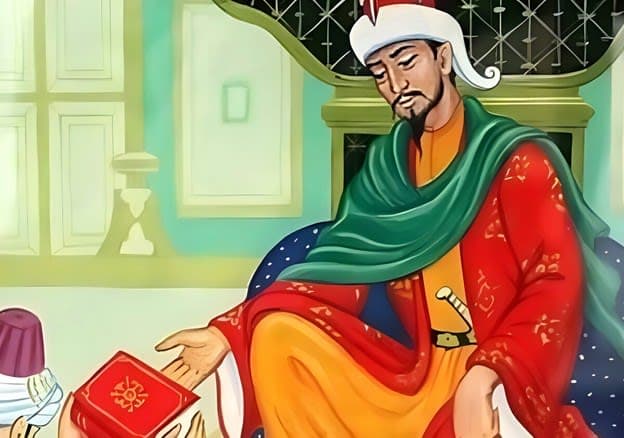
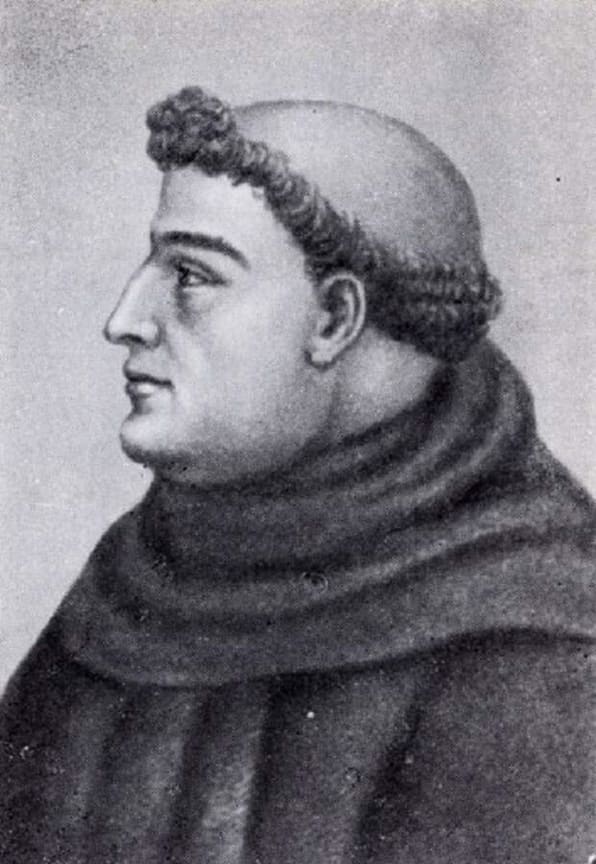
Berke was the third son of Khan Jochi. There are discrepancies about his early biography and birth date; 1221 is often cited. His mother is believed to have been Khan-Sultan, a Khwarazmian princess captured by the Mongols and taken as Jochi’s wife; she is credited with three sons: Berke, Berkecar, and Buri (Muhammad). In 1229 Berke, like other Chinggisids, took part in the quriltai that confirmed Ögedei as Great Khan.
In 1236, during the empire-wide western campaign under Batu’s command, Berke led one of the corps and operated successfully against the Qipchaqs. After Batu returned to the Lower Volga (1242), where the center of the expanded Ulus of Jochi took shape, Berke received an appanage in the North Caucasian steppes and profited from the transit trade Iran—Asia Minor—Derbent. In 1254 Batu took those lands under his own administration, and Berke shifted east of the Volga.
Berke’s conversion to Islam dates to the 1240s. At the all-Mongol quriltai of 1251, as a mark of respect for his presence, the animals for the feast were slaughtered “according to the Muslim custom.” William of Rubruck, who visited Berke’s camp in 1253, noted a ban on pork. Eastern reports say that from youth Berke studied the Qur’an in Khujand and adopted the Hanafi madhhab from the Bukhara Sufi Sayf al-Din Bokharzi.
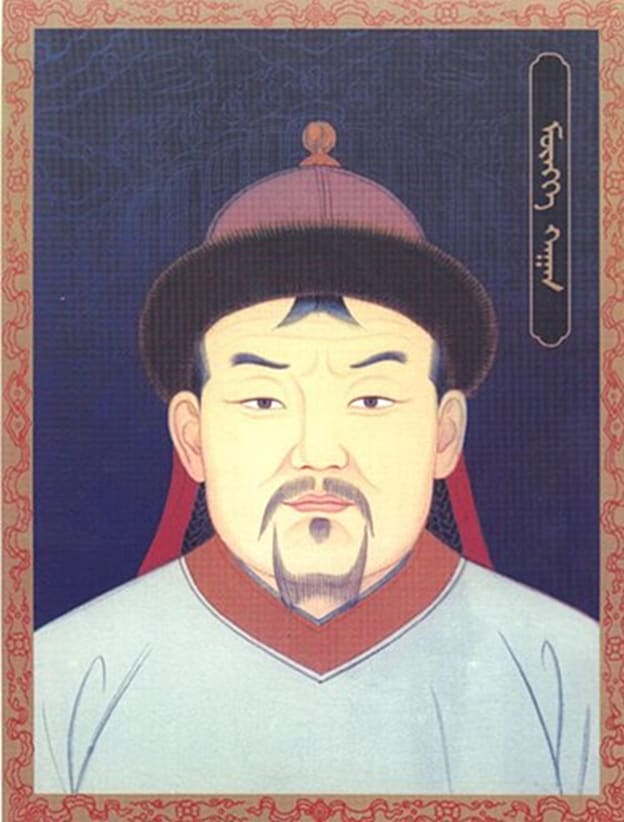
The Islamic course strengthened the khan’s social base among Volga Bulgar and Central Asian merchant elites, introduced elements of Islamic administrative tradition (a vizier Sharaf al-Din al-Qazvini is mentioned), but sharpened tensions with Nestorians: in the first years of his rule many Nestorians were executed in Samarkand and their church destroyed. In an attempt to balance religious influences in the steppe, in 1261—at the petition of Prince Alexander Yaroslavich Nevsky—Metropolitan Kirill established an Orthodox eparchy in Sarai, which eased contacts with the restored Byzantium.
In 1246, when Güyük was proclaimed Great Khan, Berke and his brothers represented Batu’s interests at the quriltai. In 1251 Batu sent Berke and Sartaq with three tümens to Mongolia to support the Toluid Möngke; on July 1, 1251, Möngke was enthroned. This marked the start of a durable alliance between the houses of Jochi and Tolui. In 1252 Berke oversaw the investigation and repressions against Chagataid and Ögedeid factions, which produced a long-term enmity with Chagatai’s grandson Alghu.
After the successive deaths of Sartaq and Ulaghchi, Berke became ruler of the Golden Horde in 1257. Sources preserve accounts of disagreements between Berke and Sartaq: Sartaq supposedly told Berke, “You are a Muslim, while I keep to the Christian faith; to behold a Muslim face is misfortune for me,” and Kirakos of Gandzak attributes Sartaq’s poisoning to Berke and Berkecar. The regent Borakchin-khatun, after Ulaghchi’s death, tried to raise Tuda-Möngke to the throne, but, suspected of seeking support from Hülegü, she was seized and executed.
On acceding to the throne, Berke “confirmed for all elder and younger brothers the appanages that had been given them by Batu.” Among the Bulgars and Mordvins the local administrations were replaced by central rule. Bashkiria retained autonomy under its local dynasty (“the lord of all Baskardia…”). At the same time, on the Great Khan Möngke’s orders, an empire-wide census (for taxation and conscription) began, which also affected Rus’: the Yuanshi, under the year 1257, reports the appointment of Kitata, son of the khan’s son-in-law Rincin, as darugha “over Rus’.”
In 1257 imperial officials appeared in the Vladimir-Suzdal, Ryazan, and Murom lands; a census was conducted and decimal districts organized (tümens, thousands, hundreds, tens). The clergy were exempted from taxes. A chronicle noted:
“That same winter the numerators arrived, searched all the land of Suzdal and Ryazan and Murom, and set over it tens-men, hundreds-men, thousands-men, and temniki… only they did not touch abbots, monks, priests, and clerics who look upon the Holy Mother of God and the lord (bishop).”


It was different in Novgorod, which had not experienced direct conquest during the “western campaign”: the first attempt at a census (backed by Alexander Nevsky, 1257) was foiled by the townspeople, who “gave gifts to the emperor.” Prince Vasily Alexandrovich, then ruling in Novgorod and an opponent of the census, withdrew to Pskov; Alexander punished his advisers. A second attempt, two years later, succeeded at the price of a sharp conflict in which “the boyars made it easy for themselves, but for the lesser folk it was hard”; the census was completed, the Tatars departed with Prince Alexander, and he installed his son Dmitry in the city.
By the start of Berke’s reign, a settlement in Southwestern Rus’ was overdue. By 1256 Daniil Romanovich had pushed Horde detachments from Northern Podolia, the Bolokhov land, and Eastern Volhynia; attempts by the voivode Kurimishi to take Volodymyr-Volynskyi and Lutsk failed. In 1258 Berke replaced Kurimishi with the temnik Burundai, strengthening his corps.

Burundai exploited the antagonism between Daniil and Mindaugas and in 1258 conducted a devastating campaign against Lithuania, compelling the forces of Vasilko Romanovich to take part; setting out from the Vorskla and the Psel, the armies joined on the Neman, ravaged central Lithuanian lands, and returned via the Yotvingians to the south, avoiding a pitched battle.
In 1259 Burundai moved through Volhynia into Poland. At Shumsk he met Vasilko Romanovich, Lev Danilovich, and Bishop Ivan; the princes were ordered to dismantle the fortifications of Danilov, Stozhesk, Lviv, Kremenets, and Lutsk, and then of Volodymyr-Volynskyi. Chełm refused to tear down its walls without Daniil’s decision; Burundai did not besiege the city, devastated the surrounding area, and turned toward Lublin and Zawichost, took Sandomierz and Lysiec, and then returned to the Dnieper.
Berke consistently developed cities, crafts, and trade in his ulus. Mosques, minarets, madrasas, and caravanserais were erected. Bulgar, having recovered from the conquest, became a key economic and political center; Berke’s residence was there—confirmed by the Polo brothers (1261–1262)—and a mint operated. Muslim merchants received special tax farms and privileges; trade corridors from Volga Bulgaria, Rus’, Crimea, and the Lower Volga to Central Asia, Mongolia, and China were purposefully supported. The scale of transcontinental trade between Asia and Eastern and further Western Europe reached unprecedented levels.
After Möngke’s death in 1259, civil war broke out in the Mongol Empire between Khubilai and Ariq-Böke for the throne; in this struggle Berke supported the latter (coins bearing Ariq-Böke’s name were struck in Bulgar), though he gave no real aid. In 1262 Alghu grew stronger, defeated Ariq-Böke’s forces, took control of Khwarazm, and drove out Berke’s governors.
In the Caucasus in 1262, war flared with Hülegü. The ideological banner was vengeance for the execution of the Abbasid caliph al-Mustasim in 1258, but the deeper cause was the Jochids’ claim to Arran and Azerbaijan, where until the mid-1250s the great khan’s governors Chormaqan and then Baiju had acted. Already under Batu, on Möngke’s orders, about three tümens had been sent to Hülegü in support of the coming campaign; the capture of Baghdad in 1258 proceeded with Jochid contingents participating. Later Hülegü refused to allot Transcaucasia to the Jochids, and the commanders of the three tümens were killed: Balakan was executed (with Berke’s sanction), Tutar and Kuli died suddenly (poisoning was suspected).
In August 1262 a 30-thousand army under the temnik Nogai entered Shirvan through Derbent. The Huleguid vanguard under Shiremün-noyan was defeated near Shemakha, but on November 14 the combined forces of Shiremün and Abatai routed the Jochids at Shabaran; on December 8 the Huleguids approached Derbent, and after a day’s battle the Horde abandoned the fortress. Joining with Abaqa, Hülegü’s son, their forces crossed the Terek and seized Nogai’s camp. On January 13, 1263, on the Terek, the Huleguids were defeated; many drowned, breaking through the thin ice. According to Ibn Wasil, Berke exclaimed: “May God disgrace this Hulawun, who has destroyed the Mongols by the swords of the Mongols. Had we acted together, we would have subdued the whole earth.” Then, passing beyond Derbent, the Horde withdrew. Hülegü in Tabriz prepared a new campaign, executed the Horde’s urtaq (partnership) merchants and confiscated their property; Berke replied by executing Persian merchants within his domains.
In 1265 a joint Mongol-Bulgar campaign into Thrace took place. The Bulgarian tsar Constantine I Tikh was avenging Michael VIII Palaiologos for the blinding of John IV Laskaris; Berke acted in response to Constantinople’s delay of the Egyptian embassy (which had departed on August 27, 1263) and for the liberation of the Seljuk sultan ‘Izz al-Din Kaykawus II, as requested by his brother Rukn al-Din Kilij Arslan IV. The allies did not attack the capital; they took the town of Enos at the mouth of the Maritsa, freed Kaykawus, and, seizing many captives, returned. The Egyptian embassy was soon released; Kaykawus II received a gracious reception in the Horde, married a daughter of Berke, received an iqṭāʿ in Solkhat (Crimea), and lived there until 1278/1279. Thus Berke, like Batu, marked Asia Minor as a sphere of interest of the Ulus of Jochi.
Meanwhile Byzantium maintained relations with the Ilkhanids: Michael VIII sent his daughter Maria to Hülegü (early 1265), but after Hülegü’s death (February 8) she became the wife of Abaqa. Abaqa’s initial goodwill toward Berke (permission to build in Tabriz a mosque in Berke’s name and craft workshops) gave way to war. In July 1265 Nogai launched an invasion of southern Azerbaijan through Derbent; on July 19, near Aksu, Nogai lost an eye and retreated to Shirvan. Abaqa crossed the Kura; the two armies camped and exchanged fire for fourteen days. Berke moved toward Tiflis, hoping to ford the Kura, but fell ill and died. The Horde’s army withdrew north. According to Persian reports, Berke’s body was transported to Sarai-Batu. After Berke’s death, Möngke-Temür, son of Toqa and grandson of Batu, was elected at the quriltai. He began issuing yarliks and minting coins in his own name rather than in the Great Khan’s; from this time a new title appears on coins of the Ulus of Jochi—“the Just Great Khan.”


