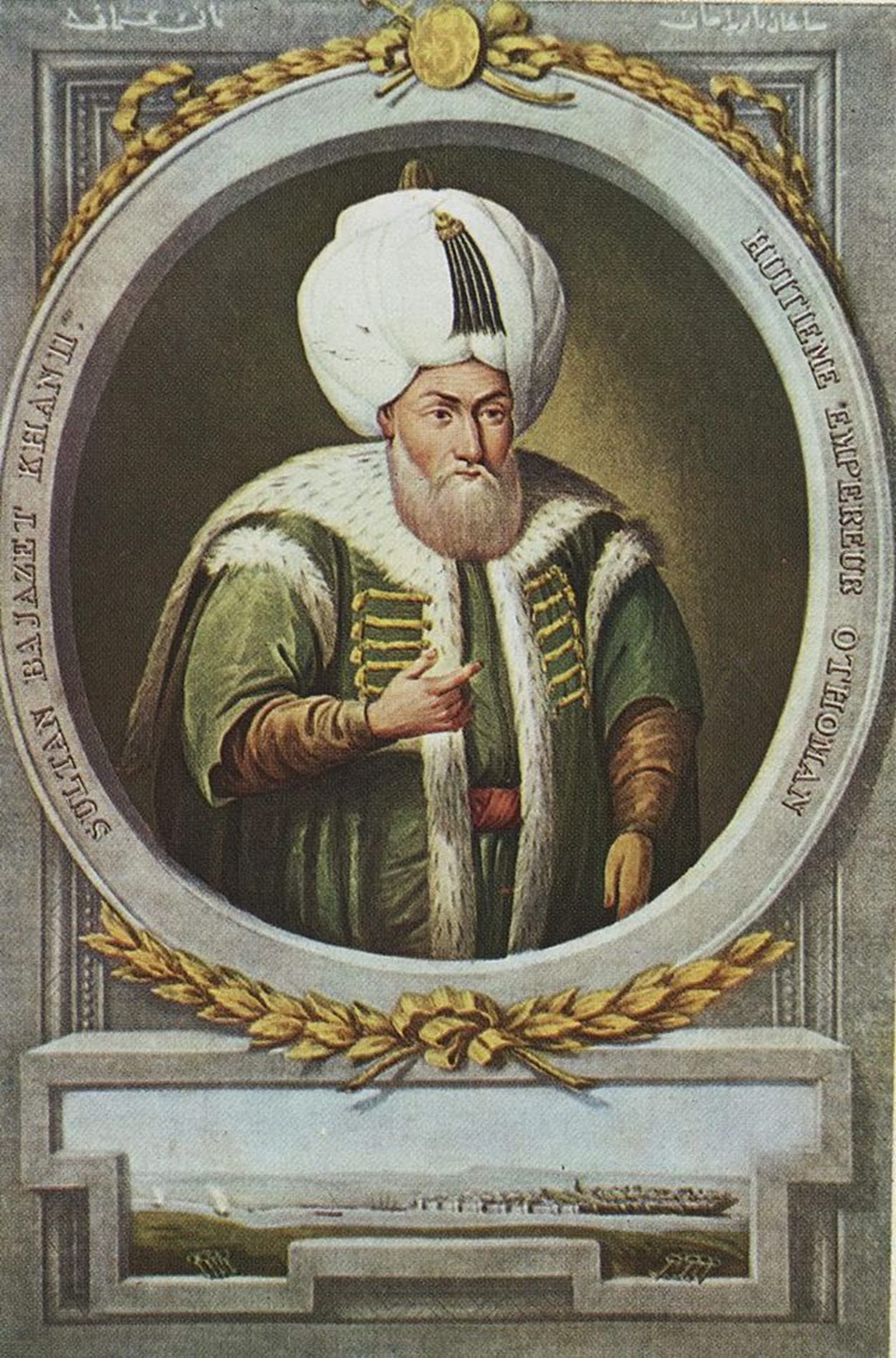

After his father’s death in 1481, Bayezid had to fight for power against his younger brother Cem, who also claimed the throne. Defeated, Cem fled to the Knights Hospitaller on Rhodes. They, and later the Pope, kept him in custody, hoping to use him against the Ottomans. Bayezid, in order to neutralize the threat, paid large sums to both the knights and the Pope to keep his brother confined. In the end Cem died in captivity—according to one version, poisoned on Bayezid’s orders.
Unlike his father, who waged constant wars, Bayezid II was known for seeking peace and internal stability. He focused on strengthening the state, laying the groundwork for the future conquests of his successors.
Despite his peaceful inclinations, Bayezid II undertook campaigns to consolidate imperial influence. His reign saw wars with Hungary, Poland, Venice, Egypt, and Persia.


Bayezid II conducted several campaigns in the Morea, which strengthened Ottoman dominance in the eastern Mediterranean. In the four-year war of 1499–1503 he defeated Venetian forces and seized all of southern Greece. The conquest of the last Venetian possessions in Dalmatia also secured strategic positions for future campaigns into Hungary.

In the East, Bayezid established full control over the Black Sea, seizing its eastern littoral in 1501. He also faced conflicts with the Mamluks in Syria and Egypt and with the new Safavid dynasty in Iran, but refrained from turning them into open wars.
One of the most remarkable aspects of Bayezid II’s rule was his treatment of religious refugees. In 1492, when the Spanish Inquisition expelled Jews and Muslims, Bayezid II dispatched his fleet under Admiral Kemal Reis to Spain.


He evacuated thousands of refugees and granted them asylum on Ottoman lands. He mocked the Spanish monarchs Ferdinand II and Isabella I for “impoverishing their own country and enriching mine” by depriving it of such useful citizens. Muslims and Jews from al-Andalus made significant contributions to the Ottoman economy and culture, bringing new ideas, technologies, and crafts. For example, the first printing press in Constantinople was opened by Sephardic Jews in 1493.

The last years of Bayezid II’s reign were marred by a succession struggle between his sons Selim and Ahmed. After a severe earthquake in Constantinople in 1509, the feud escalated. Ahmed seized Karaman and aimed for the capital. Fearing him, Selim rose in revolt in Thrace. Backed by the Janissaries, Selim returned from Crimea and forced his father to abdicate on April 25, 1512.
Bayezid II died on May 26, 1512, just a month after abdicating, on the road to Didymoteicho—presumably poisoned. He was buried beside the mosque he had built in Istanbul, leaving his successor Selim I a strong and internally stable state, ready for new great conquests.



