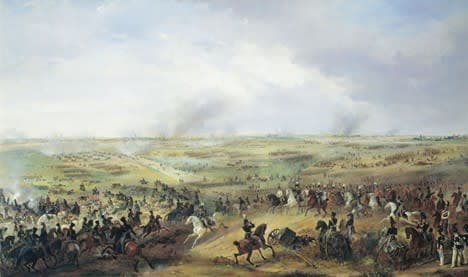
After the crushing defeat of Napoleon’s Grand Army in the Russian campaign of 1812, the European powers once again gained a chance to free themselves from French domination. In the spring of 1813 Prussia rose up against Napoleon, and the combined Russo-Prussian forces successfully liberated Germany up to the River Elbe. However, Napoleon, quickly assembling a new army from recruits, managed to win two important victories over the Russo-Prussian forces at Lützen on May 2 and at Bautzen on May 21. These victories led to the conclusion of a temporary truce on June 4, 1813.
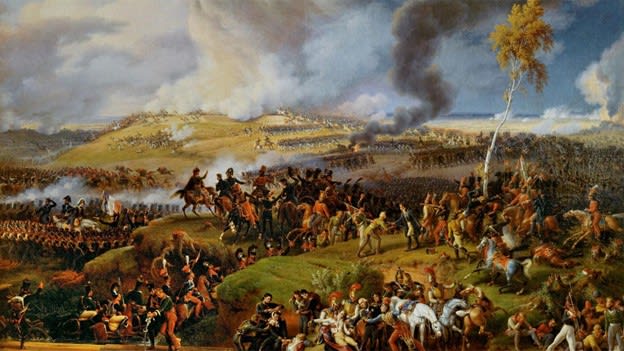
The respite lasted until August 11, when Austria and Sweden joined the anti-Napoleonic coalition. Thus, the Sixth Coalition was formed, uniting against Napoleon Great Britain, Spain, Portugal, Prussia, Russia, Sweden, and minor German states. The allied forces were divided into three large armies: the Northern Army, commanded by the Swedish Crown Prince Bernadotte; the Silesian Army, led by the Prussian Field Marshal Blücher; and the Bohemian Army, under the command of the Austrian Field Marshal Schwarzenberg.
Russian troops made up a significant part of all three armies, but for political reasons Emperor Alexander I did not claim supreme command for his generals. In August Napoleon won a major victory at Dresden, driving the Bohemian Army back into Austria. However, following the Trachenberg Plan, the allies avoided direct engagement with Napoleon himself but successfully defeated his marshals in separate battles: at Großbeeren (Marshal Oudinot), at Katzbach (Marshal MacDonald), at Dennewitz (Marshal Ney), and at Kulm (General Vandamme). These victories over the French forces allowed the allies to regroup and gather new strength for a decisive offensive.


In early October 1813, the allied forces, reinforced with reserves, advanced on Napoleon’s positions concentrated around Dresden. Blücher’s Silesian Army outflanked Dresden from the north and joined Bernadotte’s Northern Army north of Leipzig. At the same time, Schwarzenberg’s Bohemian Army, having pushed back Murat’s troops, bypassed Dresden from the south and also moved toward Leipzig, threatening Napoleon’s rear.
Napoleon, leaving a strong garrison in Dresden, hastened to Leipzig to defeat Blücher and Bernadotte before the rest of the allied forces arrived. He sought a decisive battle, since the allies’ strategy of attrition worked against him. However, historians believe he made a fatal mistake, for he overestimated the strength of his exhausted troops and underestimated the enemy’s power, mistakenly assuming that the Bohemian Army was still far away.

The French army was commanded personally by Emperor Napoleon I Bonaparte. Despite the catastrophe of 1812, he managed in a short time to restore his army’s strength to 400,000 men, though he could not replenish his losses in cavalry. Near Leipzig, Napoleon had: nine infantry corps (more than 120,000 men); the Imperial Guard (up to 42,000 men); five cavalry corps (up to 24,000 men); and the Leipzig garrison (about 4,000 men).
The army included not only Frenchmen but also Germans, Poles, Italians, Belgians, and Dutch. The only foreigner to whom Napoleon, on October 16, presented a marshal’s baton was Prince Józef Poniatowski, who commanded the Polish contingent (the 8th Infantry Corps, about 5,000 men). The Poles, loyal to Napoleon, saw in him a hope for the revival of an independent Poland, even though their territory was under Russian control.

King Frederick Augustus I of Saxony was a forced ally of Napoleon. After the Treaty of Tilsit, Saxony had received new lands at Prussia’s expense, which created tension between the states. The king, fearing he might lose his crown in the event of a Prussian victory, vacillated between sides. However, after Napoleon’s victory at Lützen, he again swore allegiance to the French emperor, and the Saxon division became part of the 7th Infantry Corps of the French army.

The allied forces converged on Leipzig in parts. The first to arrive were the Silesian Army (54–60 thousand men) and the Bohemian Army (133 thousand), followed by Bernadotte’s Northern Army (58–85 thousand) and other reinforcements. The total number of allied troops reached 360 thousand, including 127 thousand Russians, 89 thousand Austrians, 72 thousand Prussians, and 18 thousand Swedes.
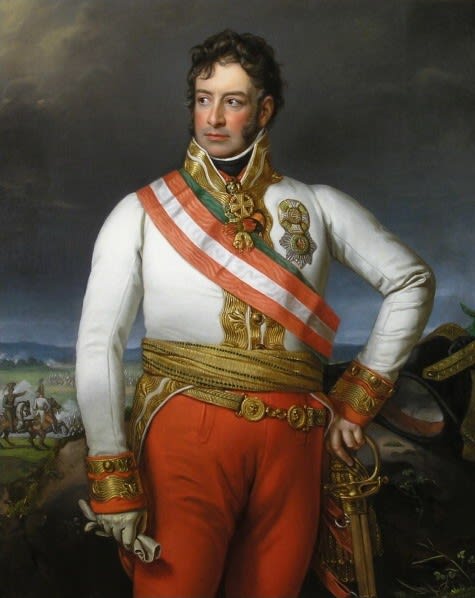
The commander-in-chief was formally the Austrian Field Marshal Karl Schwarzenberg. Known for his caution, he nevertheless managed to establish good relations with the monarchs. His appointment became a compromise, given the presence on the battlefield of three monarchs Russian Emperor Alexander I, Prussian King Frederick William III, and Swedish Crown Prince Bernadotte.
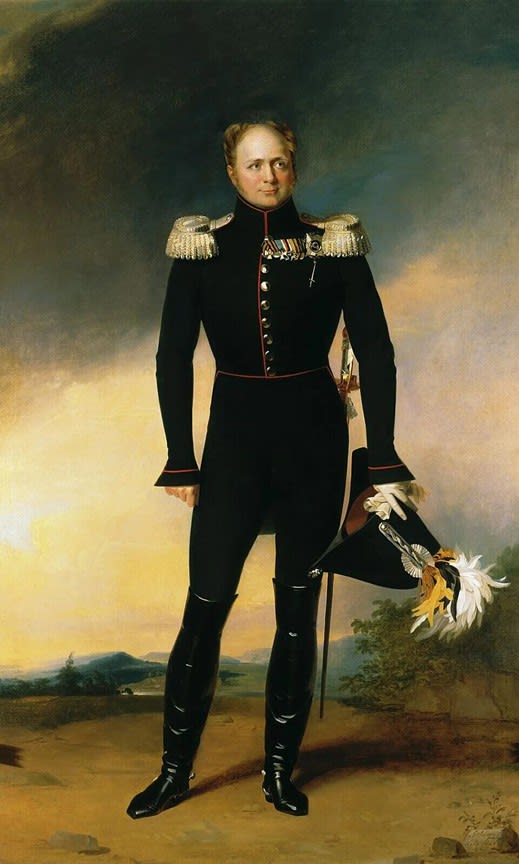
Emperor Alexander I was the chief ideologue of the Sixth Coalition. Personally offended by Napoleon’s invasion of Russia, he rejected all offers of peace, believing that only Napoleon’s complete defeat could justify the sacrifices made by his country. His diplomatic firmness and determination often saved the coalition from collapse.
Prussian King Frederick William III, who had lost half his possessions by the Treaty of Tilsit, had initially been forced to become Napoleon’s ally. However, the rise of patriotic feeling in Prussia, fueled by anti-French officers, compelled him to join his people’s uprising.
Swedish Crown Prince Bernadotte, a former Napoleonic marshal, commanded the Northern Army. His relations with Napoleon were strained, and in 1812 he broke off his alliance with France and joined Russia. During the 1813 campaign he was careful with his small Swedish contingent, pursuing his own political goals—the conquest of Norway.
On the eve of the battle, October 15, Napoleon positioned his troops around Leipzig. He concentrated the main part of his army about 110 thousand men on the south, along the River Pleisse, from Connewitz to Holzhausen, while on the north stood the troops of Marshals Marmont and Ney (about 50 thousand). His plan was to attack and defeat the Bohemian Army of the allies on October 16 before reinforcements arrived. The allies, for their part, hurried to begin their offensive so as not to let Napoleon concentrate his forces.
According to the plan of Commander-in-Chief Schwarzenberg, the allied army was to attack the French from three directions. The main forces of the Bohemian Army under Russian General Barclay de Tolly were to advance on the southeastern front, while the Austrian troops under Gyulai and Merfeld were to attack the French flanks.


On the morning of October 16, on a cloudy day, Barclay de Tolly’s Russo-Prussian troops began their attack. Around eight o’clock in the morning the artillery opened fire. The allied vanguard columns boldly advanced on the French positions. Russian and Prussian troops under Kleist captured and lost the village of Markkleeberg four times, which was defended by Marshals Augereau and Poniatowski. In the east, near the village of Wachau, the troops of Duke Eugene of Württemberg also met fierce resistance from the French army commanded by Napoleon himself. The village was taken, but due to heavy artillery losses, it had to be abandoned.
Further east, near the village of Liebertwolkwitz, Russian and Prussian troops under Gorchakov and the Austrian corps of Klenau attacked the positions of General Lauriston and Marshal MacDonald. The village was captured after a bloody battle, but after the arrival of French reinforcements the allies were forced to retreat, suffering heavy losses.
By noon the entire allied front had weakened, and Napoleon decided to go on the counterattack. Around three o’clock in the afternoon about 10 thousand French cavalrymen under Marshal Murat tried to break through the allied center near Wachau. They almost reached the hill where the allied monarchs stood, but were stopped by a counterattack of the Life Guard Cossack Regiment. At the same time, Lauriston’s attack on Güldengossa was also repelled.

At this time in the north, Field Marshal Blücher’s Silesian Army achieved decisive success. His troops, without waiting for the Northern Army’s arrival, attacked the French positions near the villages of Wiederitzsch and Möckern. Marshal Marmont, defending Möckern, had received orders to move south toward Wachau and, leaving his well-fortified positions, engaged in battle with General York’s Prussian corps. As a result of fierce fighting, Marmont’s corps was practically destroyed, and the Prussians, having lost seven thousand soldiers, broke through the French front in the north.
As night fell, the fighting subsided. Despite local successes, neither side managed to gain a decisive advantage. The allies lost about 20 thousand men, but the French failed to break their front.
In the evening of October 16, Napoleon realized the full danger of his position. He hoped for family ties with Austrian Emperor Francis II and sent the allies peace terms through captured General Merfeld. He offered to cede the Duchy of Warsaw, Holland, the Hanseatic cities, and to abandon the Confederation of the Rhine. However, the allies, seeing in Napoleon’s proposal an admission of weakness, did not honor it with a reply.
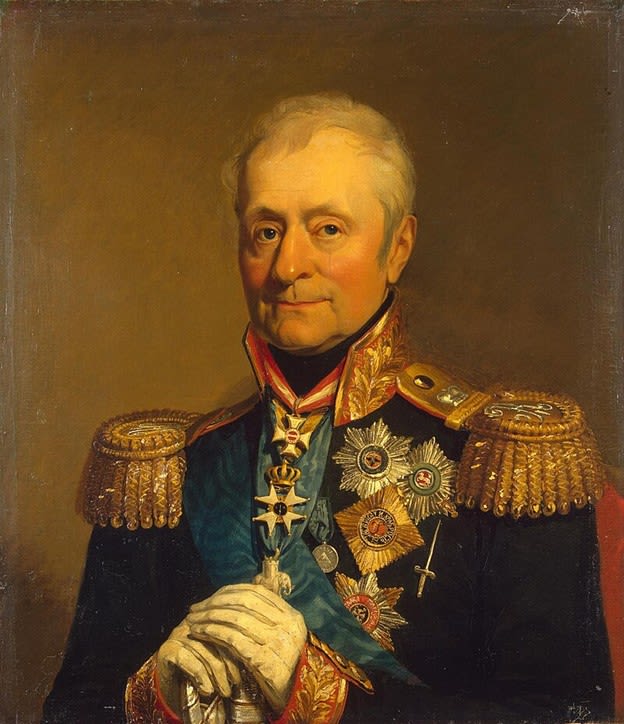
Sunday, October 17, passed mostly quietly, except for fighting in the north where Blücher’s troops approached Leipzig closely. The allies held a war council, at which it was decided to resume the offensive the next morning, since General Bennigsen’s Polish Army had arrived.
During the night of October 18, Napoleon realized that his positions had become vulnerable due to a shortage of troops, and he withdrew to a new, more compact line near Leipzig. By this point his army numbered about 150 thousand men, while the allies had 300 thousand soldiers. At seven o’clock in the morning on October 18, Schwarzenberg gave the order to attack. The fighting was incredibly fierce. Napoleon directed the defense, trying to hold his positions, but the allied columns advanced unevenly.
In the south the Austrians attacked the French positions but were thrown back after the arrival of reinforcements sent by Napoleon. The fiercest fighting flared up near the village of Probstheida, which was defended by Marshal Victor. Napoleon sent in the Old Guard and the Guard artillery, but they were stopped by heavy artillery fire. By the end of the day the allies still failed to take Probstheida.
On the right flank Bennigsen’s army, late to begin the offensive, captured several villages. In the battle for Paunsdorf the English rocket batteries participated successfully. At the height of the battle a turning point occurred: the entire Saxon division (3 thousand soldiers), and then other German units, went over to the side of the allies. This created a huge gap in the center of the French front.
By the evening of October 18, the French were pushed back to Leipzig itself. Napoleon ordered a retreat. Learning that the artillery ammunition was nearly exhausted, he began withdrawing his troops during the night, using the only road to Weissenfels.
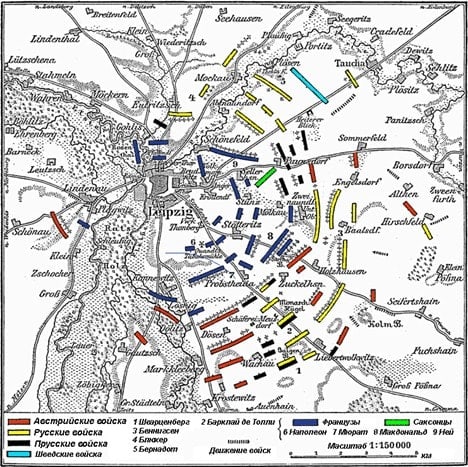

On the morning of October 19, it became clear that an assault on the city would not be necessary. King Frederick Augustus I of Saxony offered to surrender the city without a fight in exchange for the safe withdrawal of the French troops, but Alexander I rejected his offer. While the French army, in panic and confusion, tried to leave the city, the allies began the assault. The panic intensified when the only bridge across the Elster River was accidentally blown up. As a result, about 20 thousand French soldiers, including Marshals MacDonald and Poniatowski, were trapped in the city. Many of them, including Poniatowski, drowned trying to swim across the river. By one o’clock in the afternoon Leipzig was completely captured.

The “Battle of the Nations” ended in catastrophe for Napoleon. He was forced to retreat from Saxony. The losses of the French army are estimated at 70–80 thousand men, including about 40 thousand killed and wounded, as well as 15–20 thousand prisoners and deserters. Only about 40 thousand soldiers managed to return to France. The allies lost up to 54 thousand men, but their victory was absolute.
This battle became a turning point in the history of the Napoleonic Wars. After the defeat at Leipzig, Bavaria and other German states went over to the side of the coalition, which led to the collapse of the Confederation of the Rhine, and the French garrisons in Germany surrendered.
The allies invaded France, and in April 1814 Napoleon was forced to abdicate the throne.


