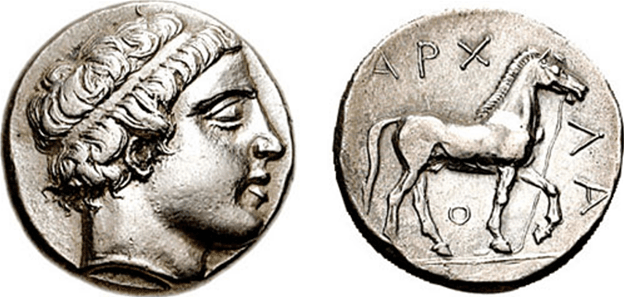
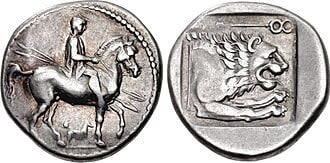
King Archelaus, the son of Perdiccas II and Simiche, entered the historical stage through a haze of controversy, intrigue, and dark rumors. Ancient tradition, shaped largely by hostile Athenian propaganda, often portrayed his mother as a mere slave and the king himself as an illegitimate bastard. Modern historians, however, reject this image.
A fragmentarily preserved Athenian-Macedonian treaty from 423–422 BC provides compelling evidence: in the list of the kingdom’s most prominent figures who signed the document, Archelaus appears third — immediately after his father Perdiccas and his uncle Alcetas. Such a position would have been virtually inconceivable for the son of a slave. Simiche almost certainly belonged to the local aristocracy, and her marriage to Perdiccas was probably political in nature. Primogeniture was not an absolute rule in Macedonia at the time, and Archelaus may well have been formally designated heir shortly before his father’s death.
Nevertheless, ancient authors, particularly Plato, associated Archelaus’s rise to power with a series of brutal and treacherous murders.
According to legend, he invited his uncle Alcetas and Alcetas’s son Alexander, his own cousin, to a banquet. Once the guests had become drunk, Archelaus allegedly ordered them to be thrown into a cart, taken out into the countryside, and mercilessly murdered.
The bloody purge supposedly did not end there. His next victim was his seven-year-old half-brother, whom Aelius Aristides and his scholiasts identify as either Alcetas or Merops. The child was drowned in a well, while his devastated mother was cynically told that the death had been an accident.
Although modern scholars treat these stories with considerable skepticism, they acknowledge that the consolidation of royal authority in the still relatively undeveloped political environment of Macedonia rarely occurred without bloodshed.
In 413 BC, Archelaus became the undisputed ruler of the kingdom.
His accession coincided, remarkably, with a geopolitical catastrophe for Athens — the crushing defeat of its expedition to Sicily.
What was a tragedy overseas became an enormous opportunity for Macedonia. Weakened Athens, deprived of access to Sicilian and Italian markets, desperately needed timber and pitch to rebuild its fleet.
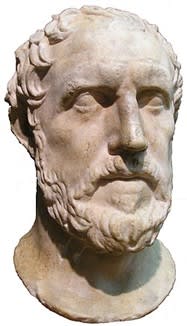
As the historian Thucydides aptly observed, the Athenians were left with little choice but to “find ways of obtaining ship-timber and money.”
Macedonia became their principal salvation.
Whereas Archelaus’s father had constantly been forced to fear Athenian expansion, the situation had now fundamentally changed. Athens no longer represented an existential threat.
Archelaus formally remained neutral in the raging Peloponnesian War between Sparta and Athens, but in practice pursued an extremely profitable and openly pro-Athenian policy.
The king did more than merely supply strategic raw materials. He allowed Athenian ships to be constructed directly in Macedonian shipyards and permitted private individuals to cut timber without obstruction.
The orator Andocides proudly declared:
“Archelaus, who had long been bound by ties of guest-friendship to our family, allowed me to cut and export as many of these timbers as I wished.”
This relationship benefited both sides.
When the coastal city of Pydna rebelled against Archelaus, Athenian troops under the command of Theramenes came to assist the Macedonian king.
The siege dragged on, forcing the Athenians eventually to sail away. After the city fell, however, Archelaus made a radical decision: he ordered Pydna to be relocated twenty stadia, approximately 3.5 kilometers, inland, permanently cutting the rebellious city off from the sea.
In recognition of the king’s vital support, the Athenian Assembly granted Archelaus and his descendants the prestigious titles of proxenos and euergetes, or benefactor, in 407–406 BC.
The revenues generated by this trade allowed Archelaus to accumulate enormous resources for the internal transformation of his kingdom, while the continuing conflict among the Greek states ensured that Macedonia remained relatively safe from invasion from the south.
On the external frontiers, Archelaus acted with equal determination.
In the unstable west, he faced a powerful coalition of the tribes of Lyncestis and Illyria under Kings Sirras and Arrhabaeus II.
To stabilize the region, Archelaus resorted to dynastic marriage, giving his daughter in marriage to Sirras, king of Elimea — or, according to another version, to Sirras’s son Derdas. This alliance helped preserve a fragile balance of power.
Events in the east developed much more successfully.
Archelaus triumphantly restored Macedonian control over Bisaltia and its rich silver mines, which had been lost under his father.
Numismatic evidence also suggests that Macedonia firmly consolidated its position in the west during this period, extending its authority over the territories of Orestis and Tymphaea.
Near the end of his reign, Archelaus became involved in a complex political struggle in Thessaly.
The local oligarchic dynasty of the Aleuadae called upon him for assistance against their political rivals. Macedonian troops invaded the region and occupied its principal city, Larissa.
In exchange for this service, the king received a strategically valuable prize: the territory of Perrhaebia, including the crucial mountain passes of Petra and Volustana, which opened a direct route from Thessaly into the heart of Macedonia.
The opponents of the Aleuadae, alarmed by these developments, turned for assistance to the tyrant Lycophron of Pherae and to Sparta, which was increasingly assuming the role of hegemon in Greece.
The final outcome of the campaign remains obscure. Some sources claim that Archelaus prudently withdrew his forces voluntarily, while others suggest that the Macedonian army left Thessaly only after the king’s sudden death.
Perhaps the greatest legacy of Archelaus was his unprecedented administrative and military reform.
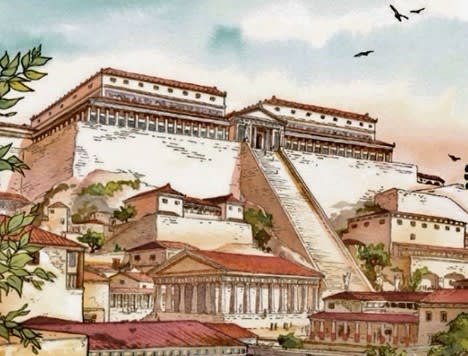
Recognizing that the ancient capital of Aegae was vulnerable because of its proximity to the Greek colonies of Methone and Pydna, the king transferred the political center of the kingdom to Pella.
Aegae retained its sacred status as the burial place of the Macedonian kings, while Dion became the principal religious center of the kingdom. Yet it was Pella that rapidly developed into the “greatest city of Macedonia.”
The Late Antique author Claudius Aelian wrote with admiration that the king spent the astonishing sum of four hundred minas on the construction of a magnificent palace and invited the celebrated Greek painter Zeuxis to decorate its interiors.
Archelaus reorganized the internal geography of the kingdom, dividing it into districts centered on Pella, Aegae, Beroea, Alcomenae, and Alorus.
These cities became recruitment centers for the new army.
Straight roads radiated from them toward the capital. The construction of roads and the erection of fortresses at strategically important locations dramatically strengthened the defensive capabilities of the kingdom.
Thucydides left an unequivocal assessment of these achievements:
“The fortifications now existing were built by Archelaus... after coming to the throne, he ordered straight roads to be constructed and carried out various reforms... In the preparation of the army and military equipment, this king accomplished more than all the eight kings who had preceded him.”
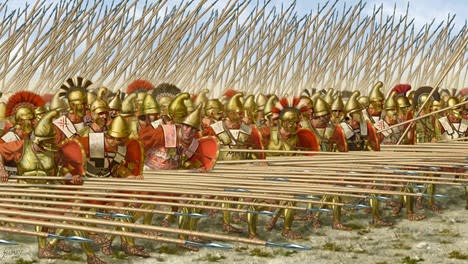
Archelaus laid the foundations of a heavily armed Macedonian infantry.
Although the economy of the kingdom was not yet strong enough to support a permanent standing army, this represented the first major step toward the future Macedonian phalanx.
The military reforms also weakened the position of the old aristocracy by transferring some decision-making authority to an “assembly of the army.”
In addition, Archelaus encouraged the development of towns modeled on Greek poleis, although without granting them political independence, so that they could serve as dependable sources of hoplite manpower.
To finance his ambitious projects, the king regularized taxation imposed on both Macedonians and foreign merchants, relying heavily on revenues from timber exports, royal lands, and mines.
Economic activity intensified throughout the kingdom.
For the first time, Macedonia began issuing bronze small-denomination coinage, marking a gradual transition from primitive barter toward a genuine monetary economy.
After regaining control over the silver of Bisaltia, Archelaus also resumed the minting of full-weight silver coins.
The strengthening of commercial ties with the east is reflected in the appearance of coins based on the Persian weight standard.
These coins served not merely as instruments of exchange, but also as powerful vehicles of royal propaganda. They bore images of Heracles, Apollo, King Archelaus himself, and a goat — a reference to the foundation myth of Aegae — while the ruler’s name also began appearing prominently in the coin legends.
Archelaus was deeply determined to secure Macedonia’s respect within the cultivated Hellenic world.
To embellish Pella, he invited some of the finest artists, architects, and writers of the Greek world.
The greatest triumph of his cultural policy came in 408 BC, when the brilliant playwright Euripides arrived at his court.
The seventy-year-old poet found honor and respect in Macedonia.
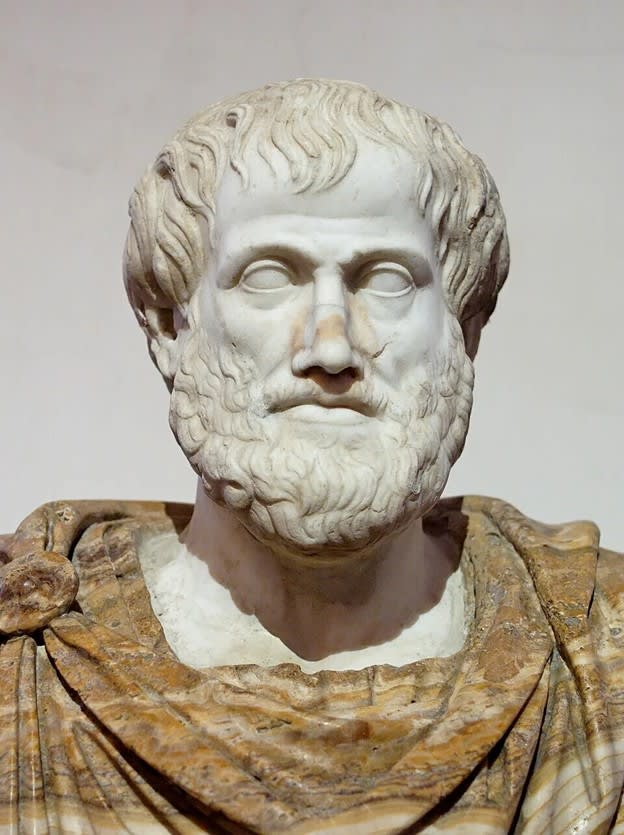
Aristotle preserved a story in which a local aristocrat named Decamnichus dared to insult Euripides. Archelaus responded without hesitation by ordering the noble offender to be flogged.
While in Pella, Euripides wrote four tragedies, two of which have survived: Iphigenia at Aulis and The Bacchae.
A special gift to the king was the drama Archelaus, named after the mythical descendant of Heracles whose name the ruler himself bore.
Its premiere was staged with great ceremony at Dion, at the foot of Mount Olympus.
It was during the reign of Archelaus that the legend of the dynasty’s descent from Argos received a new literary form. The mythical ancestor may also have appeared in the lost play Temenus, or The Temenidae, whose plot survives only through the later retelling of Pseudo-Hyginus.
When Euripides died in 406 BC, Archelaus flatly refused to return his body to Athens.
In the poet’s homeland, a cenotaph was erected with the inscription:
“All Greece is the tomb of Euripides, but his body lies in Macedonia, where it was destined that he should end his life...”
Pella became a magnet for intellectuals.
Among those who visited the Macedonian court were the historian Thucydides, the tragedian Agathon, the epic poet Choerilus, the sculptor Callimachus, and the physician Thessalus, son of the great Hippocrates.
To firmly establish Macedonia as a cultural center, Archelaus founded grand festivals at Dion in honor of Zeus and the Muses — the Macedonian “Olympic Games.”
The historian E. Badian later referred to them ironically as “counter-Olympics,” since the Greeks still remained reluctant to admit Macedonians fully into their own Panhellenic competitions.
Reports by the Late Antique author Solinus that Archelaus personally won chariot races at the true Olympic Games and at Delphi are regarded by many scholars as doubtful legends.
The life of the great reformer ended violently in 399 BC.
Plato, Aristotle, Diodorus Siculus, and Claudius Aelian all agree that the king was killed, although they differ over the circumstances.
Diodorus offers the most mundane explanation: Archelaus supposedly died in a hunting accident.
The account of Aristotle, however, is often considered the most credible, particularly because he was born in Macedonia only about fifteen years after these events.
According to Aristotle, Archelaus fell victim to a conspiracy in which personal revenge and high politics became intertwined.
The king was murdered by his favorites Crateuas — also rendered as Crateus or Craterus — and Hellenocrates of Larissa, who were said to have grown weary of their relationship with the monarch.
The conspiracy was allegedly led by the same Decamnichus who had once been flogged for insulting Euripides.
The involvement of Hellenocrates, a man from Larissa, may also point toward the influence of Archelaus’s foreign political enemies in Thessaly.
Assessments of Archelaus’s reign have always been sharply divided.
To the arrogant intellectual elite of Athens, he remained little more than a “semi-barbarian petty king.”
Athenians mocked those who traveled to Pella in search of employment. Aristophanes ridiculed Agathon for leaving for a place “where even Makar never drove his calves,” while Athenaeus gossiped about the gluttonous Choerilus consuming his royal salary of four minas every day.
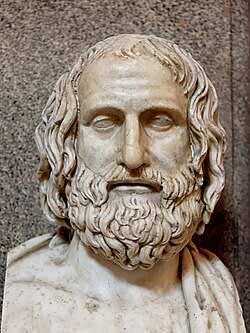
According to Aristotle, Socrates proudly rejected an invitation from the king, declaring that “it is equally insulting to be unable to repay either a good deed or an injury.”
Antisthenes, one of the founders of Cynicism, criticized the sophist Gorgias for maintaining connections with the king’s allies, while Thrasymachus protested:
“Should we Greeks be slaves to Archelaus, a barbarian?”
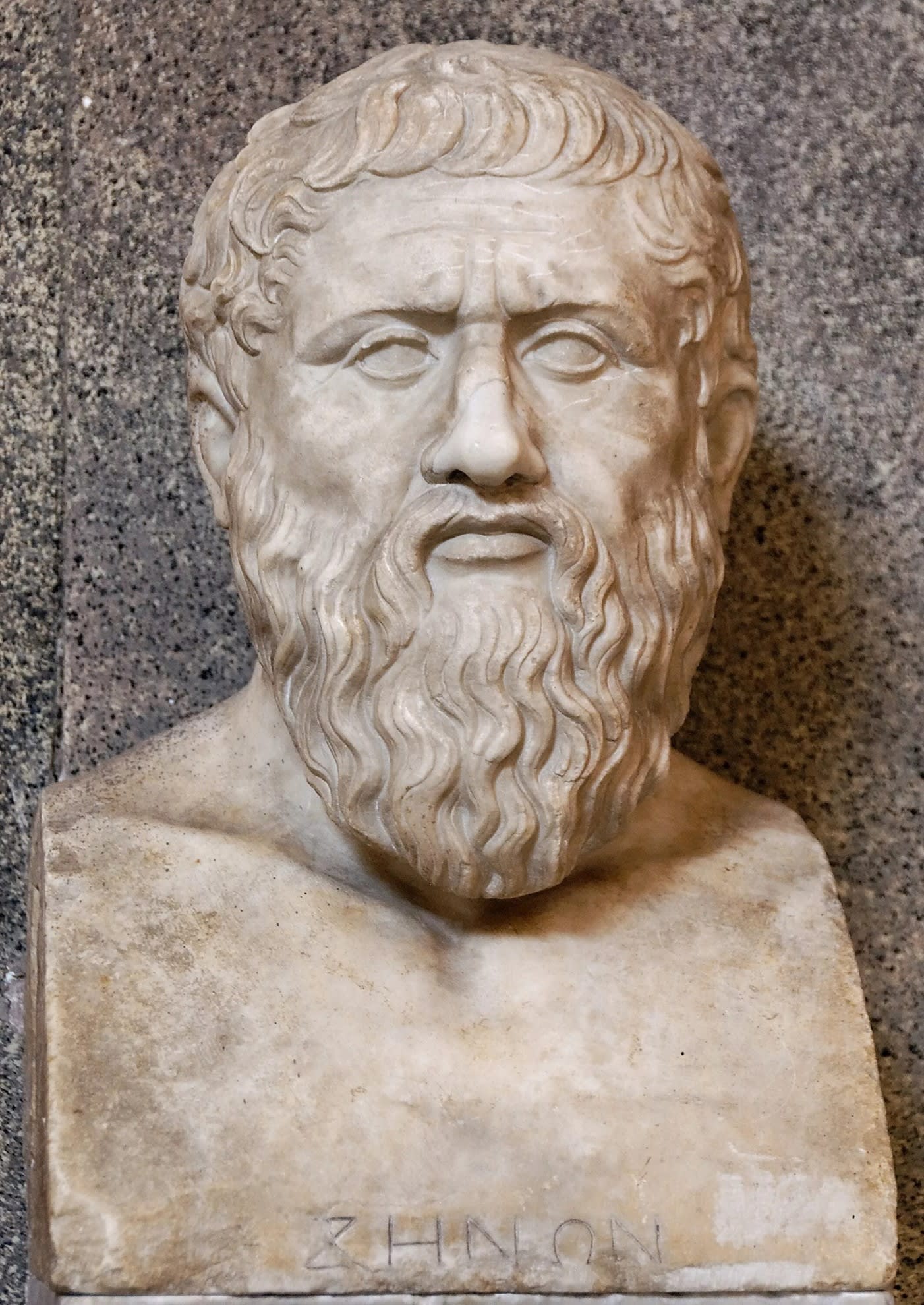
Plato was especially hostile toward Archelaus and effectively created his reputation as the “ideal villain.”
In the dialogue Gorgias, the philosopher condemns him as “the greatest enemy of justice,” a man who “commits the greatest crimes... and successfully escapes punishment.”
Archelaus was also accused of superstition and cowardice. One story claimed that during a solar eclipse the king became terrified and hid inside his chambers.
Late Antique authors, by contrast, presented him as an enlightened monarch.
Plutarch told how Archelaus rebuked a greedy guest at a banquet by handing a golden cup to Euripides and saying:
“You are suited to asking, but Euripides is suited to receiving without asking.”
Claudius Aelian, meanwhile, preserved the king’s witty response to a talkative barber who asked how he wished to be shaved:
“In silence!”
Modern historians view Archelaus as a figure comparable in scale to Peisistratus or Polycrates — as the historian I. E. Surikov has argued, a pragmatic tyrant and a great builder of the state.
His “Philhellenism” was not blind admiration of Greek culture, but a carefully employed instrument for strengthening Macedonia.
It is true that after his death the Macedonian army entered a period of decline, and E. Borza correctly notes that beneath the brilliant façade of Pella, Macedonia remained in many respects a relatively backward kingdom.
Yet it was Archelaus who created the essential foundations — roads, fortresses, an improved economy, and a reorganized army — upon which, only a few decades later, Philip II and Alexander the Great would build the greatest empire of the ancient world.


