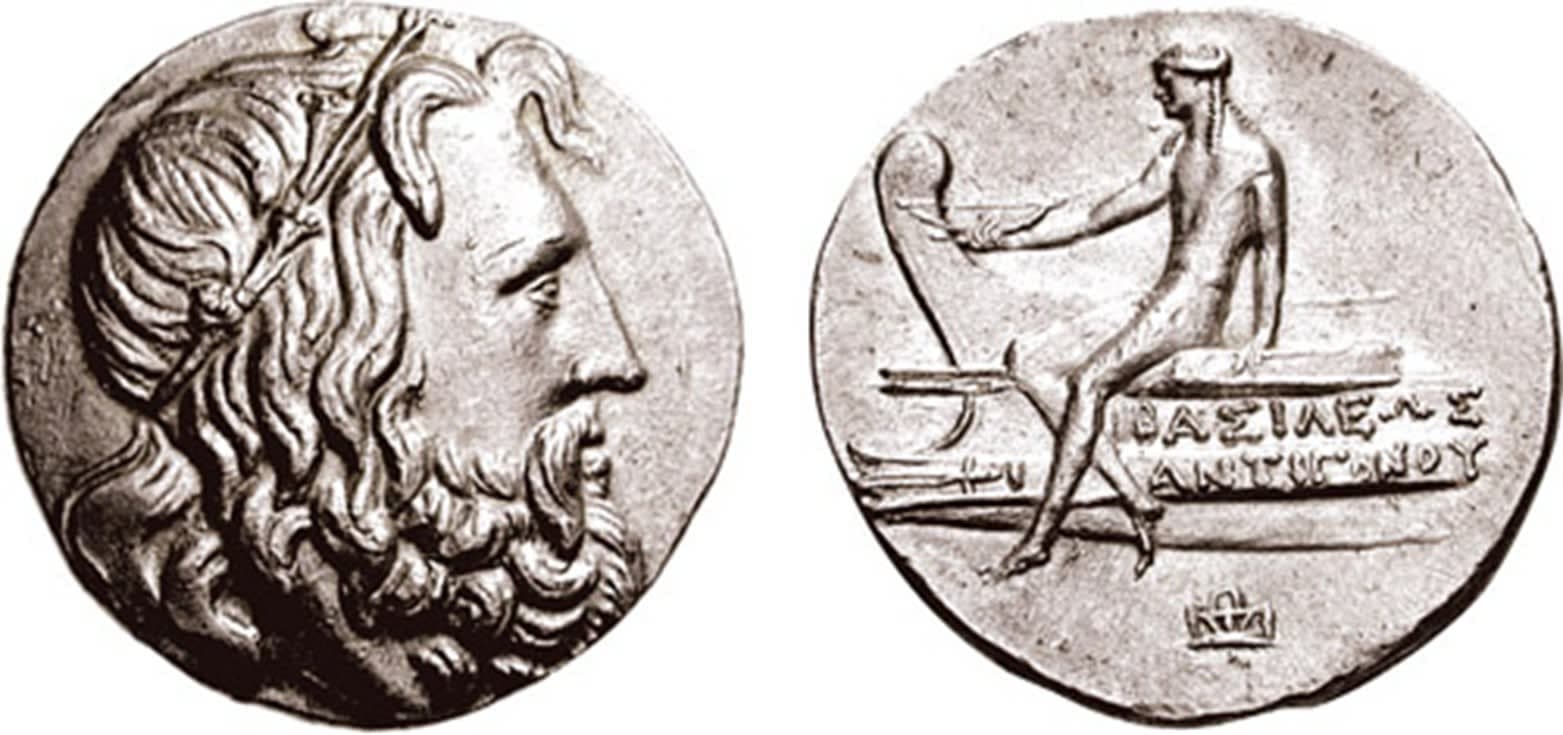
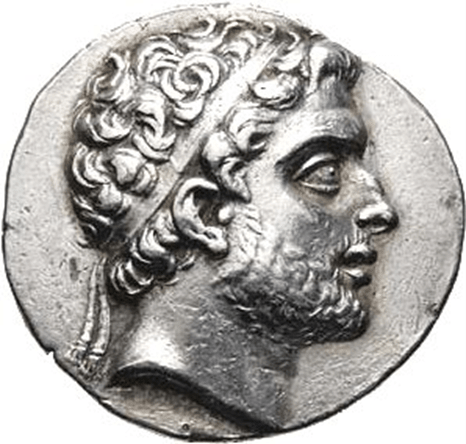
In 229 BC, Macedonia faced a mortal threat. During a difficult and exhausting war against the fierce Dardanian tribes, the Macedonian king Demetrius II was killed. The kingdom stood on the brink of catastrophe, for the legitimate heir to the throne, the young prince Philip, was barely nine years old.
At this critical moment, the burden of power was assumed by the boy’s uncle, Antigonus III Doson, who became regent and, in practice, the full ruler of the kingdom.
Aware of the fragility of his position and determined to suppress any accusations of usurpation, Antigonus took a noble and farsighted political step: he officially proclaimed the young Philip his sole and legitimate heir, thereby guaranteeing dynastic continuity.
At the moment Antigonus III Doson assumed power, the kingdom was in a state of profound decline.
Macedonia had suffered humiliating setbacks during the prolonged Demetrian War and had almost entirely lost its ability to influence Greek affairs.
In the Peloponnese, the Achaean League was rapidly becoming the dominant political force. Greek poleis joined it in large numbers, expelling Macedonian garrisons and overthrowing tyrants loyal to the Macedonian crown.
The territorial losses were enormous. Strategically important Thessaly and Boeotia had slipped from Macedonian control, while much of central Greece had fallen under the firm domination of the hostile Aetolian League.
Yet Antigonus III Doson proved to be a ruler of exceptional intelligence and iron determination.
His first years in power were devoted to the decisive restoration of Macedonia’s historical frontiers.
Displaying impressive military ability, he inflicted a crushing defeat upon the Aetolians and once again brought most of Thessaly under Macedonian authority.
He then employed careful diplomacy and made a number of well-calculated concessions, successfully driving a wedge between his enemies and persuading the Aetolian League to abandon its alliance with the Achaeans.
To further weaken the Achaean federation, Antigonus struck unexpectedly at its principal financial supporter and Macedonia’s traditional geopolitical rival — Egypt.
He launched a daring naval operation and successfully landed troops in Caria, one of the most strategically important regions of Asia Minor, thereby disrupting the calculations of the Ptolemaic rulers.
Having secured a reliable bridgehead in Asia Minor, the king began systematic preparations for a decisive confrontation with the Achaean League.
Meanwhile, a new major conflict had erupted in the Peloponnese itself.
In that same year, 229 BC, the so-called Cleomenean War began — a bitter struggle between the Achaean League and a resurgent Sparta.
For three years, the talented and ambitious Spartan king Cleomenes III won one brilliant victory after another.
He swept across the peninsula with fire and sword, bringing almost the entire Peloponnese under his control and pushing the Achaean League to the brink of total destruction.
By 224 BC, after another disastrous defeat at the Battle of Hecatombaeum, the position of the Achaeans had become truly desperate.
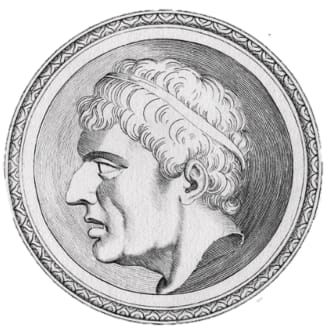
Their long-standing leader and strategos, Aratus of Sicyon, appealed first to the Aetolians and the Athenians for help. After receiving a cold refusal from both, he was forced to swallow his pride and turn to his sworn enemy — Macedonia.
Antigonus III Doson, fully aware of his advantage, imposed a harsh condition: the impregnable fortress of Acrocorinth had to be transferred into Macedonian hands.
Aratus hesitated, and Antigonus received firm guarantees only when Cleomenes’s Spartans entered Corinth itself and placed the fortress under close siege.
The time for diplomacy had ended.
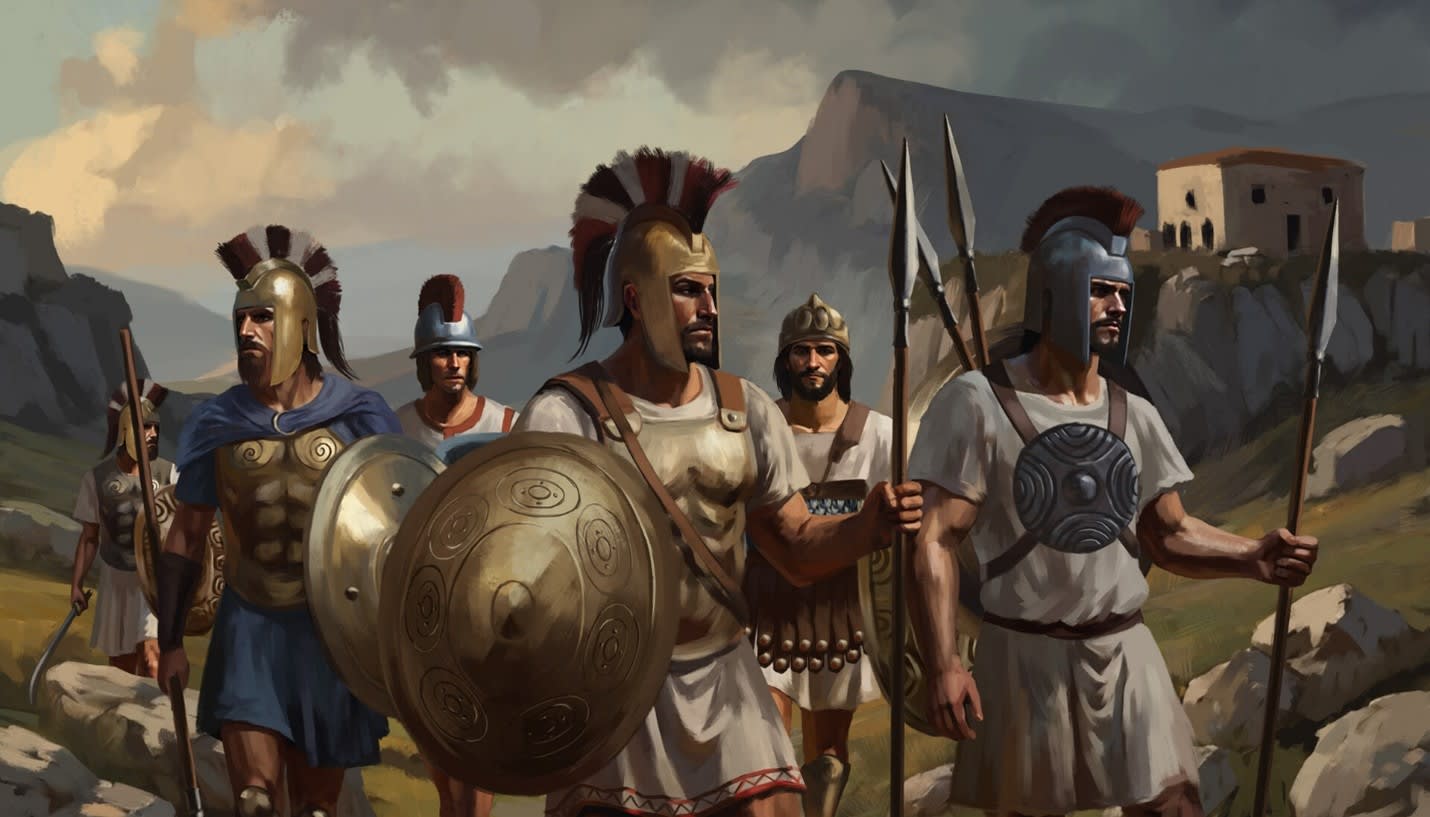
In 223 BC, with the overland route to the south completely blocked by hostile Aetolian forces, Antigonus carried out a massive amphibious transfer of troops.
He landed near Megara at the head of an enormous army for the period: 20,000 heavily armed infantrymen and 1,400 cavalrymen.
The Macedonian war machine operated with remarkable efficiency.
Within only a few months, Antigonus relieved and occupied Acrocorinth, entered Argos in triumph, and brought several other key Peloponnesian cities under his control.
On the wave of these spectacular victories, Antigonus initiated the creation of a new Hellenic League.
The grateful — and intimidated — Greeks unanimously elected him strategos autokrator, granting him virtually unlimited military and political authority.
In the spring of 222 BC, the Macedonian advance continued.
Antigonus captured Tegea, Orchomenus, and Mantinea.
The fate of Mantinea became a terrifying warning to the whole of Greece.
Because the city had voluntarily defected to Sparta and abandoned the alliance, it was subjected to ruthless destruction. The city was devastated, while its inhabitants were either executed or sold into slavery on a massive scale.
Alongside his military victories, Antigonus also achieved an important diplomatic success: he finally persuaded Egypt to terminate all financial and political support for the Spartan army.
The final confrontation soon followed.
The Macedonian army, reinforced by numerous allied contingents, invaded the heart of enemy territory — Laconia.
At the epoch-making Battle of Sellasia, the army of Cleomenes III was completely defeated.
The Spartan military machine ceased to exist.
Antigonus III Doson entered Sparta in triumph — a city that had never before witnessed the march of a victorious enemy army through its streets.
Yet contrary to the grim expectations of the defeated population, the Macedonian king showed remarkable restraint.
He treated Sparta leniently and strictly forbade his soldiers from looting, plundering, or committing violence against civilians.
Nevertheless, Antigonus completely reshaped the political structure of the state.
The Spartan monarchy was abolished, the radical reforms of Cleomenes were overturned, and an oligarchic regime favorable to Macedonia was firmly restored.
Fate, however, did not allow the great commander to enjoy the fruits of his victory.
While still in conquered Sparta, Antigonus received alarming news: Dardanian forces had once again broken through Macedonia’s northern frontier and invaded the kingdom.
Acting with his characteristic determination, the king left the young prince Philip in the Peloponnese with an important mission — to strengthen political ties and consolidate the strategic alliance between Macedonia and the Achaeans.
Antigonus himself immediately marched north at great speed to defend his homeland.
There he met the invading forces in an extraordinarily violent and bloody battle.
While encouraging his soldiers, the king shouted with such force that a blood vessel reportedly ruptured.
He nevertheless won his final great victory, completely defeating the enemy.
But the triumph proved fatal.
Several weeks later, suffering from severe internal bleeding, Antigonus III Doson died, leaving the young Philip a powerful, restored, and once again dominant Macedonian kingdom in the Balkans.


