The story of Andriscus, the man who challenged mighty Rome and became the last ruler of an independent Macedonia, is filled with mysteries, contradictions, and extraordinary twists of fate. The details of his origins remain obscure, and ancient authors were almost unanimous in describing him as an impostor who invented his royal ancestry.
It is generally believed that Andriscus was in reality a simple fuller from the city of Adramyttium in Aeolis, on the western coast of Asia Minor. The exact date of his birth has been lost to history, but it is known that by 154 BC, when he first openly declared his claim to the Macedonian throne, he was already a fully grown man.
Andriscus himself told a very different story about his past.
According to his version, until adolescence he had been educated in his native Adramyttium under the care of a mysterious Cretan guardian. After the guardian’s death, responsibility for the young man passed to his foster mother.
When Andriscus reached adulthood, the woman allegedly revealed the great secret of his life. She gave him a sealed parchment supposedly written by Perseus, the last legitimate king of Macedonia from the Antigonid dynasty.
In this message, Perseus supposedly acknowledged Andriscus as his illegitimate son by one of his concubines.
Furthermore, his foster mother allegedly revealed the locations of two enormous royal treasures hidden securely at Amphipolis and Thessalonica.
Knowledge of these secret hoards would later become one of Andriscus’s strongest arguments in support of his royal ancestry.
The historian Benedict Niese, examining this story, allowed that there might have been a small element of truth in Andriscus’s claims, but broadly agreed with the ancient tradition: Andriscus was an extraordinarily talented pretender and impostor.
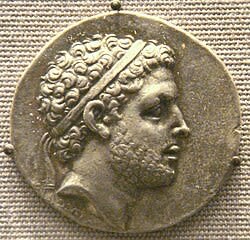
Nevertheless, he possessed one undeniable advantage that made people willing to believe him — his astonishing, almost disturbing physical resemblance to the late King Perseus.
Around 154–153 BC, Andriscus left Pergamon.
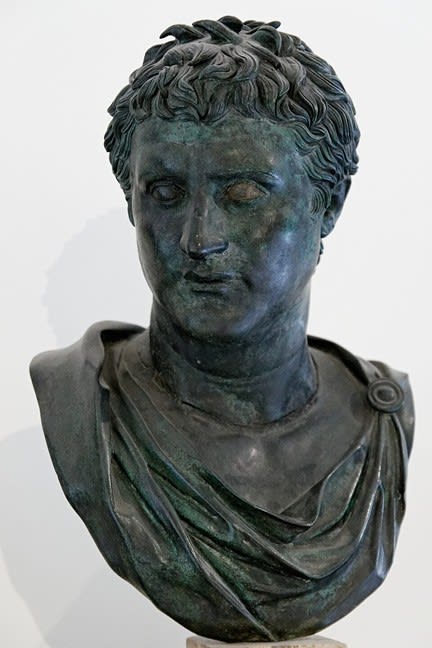
According to his own account, his mother, or foster mother, urged him to do so because she reasonably feared that the pro-Roman Pergamene king Eumenes II might eliminate a potential source of instability.
Leaving his homeland behind, Andriscus traveled to Syria, where for the first time he openly proclaimed his claim to the Macedonian crown.
Historians still debate exactly what happened in Syria.
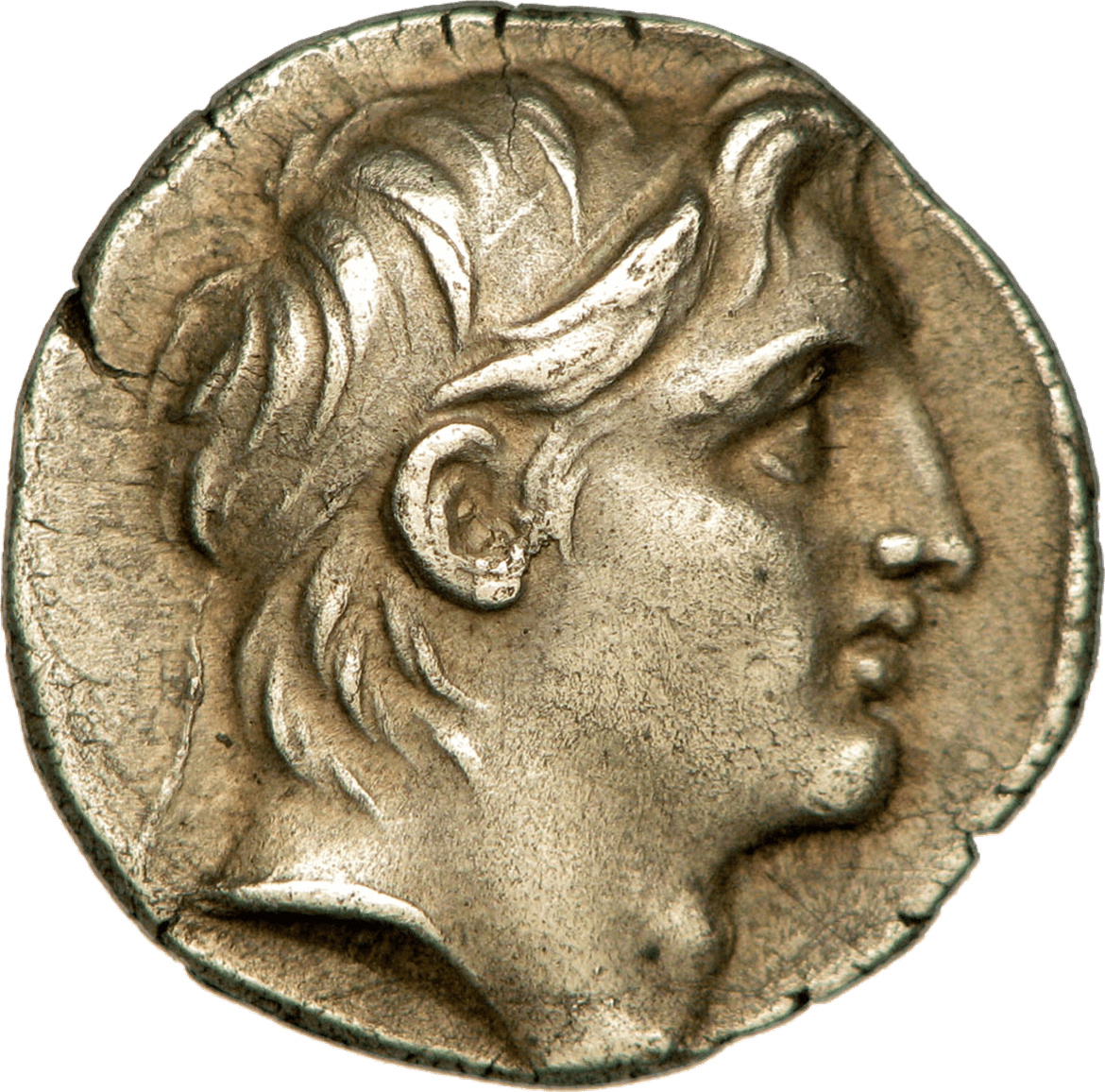
Livy and Cassius Dio report that Andriscus traveled directly from Pergamon to the court of the Seleucid king Demetrius I Soter and immediately presented his royal claims.
Diodorus Siculus offers a different and more colorful version.
According to him, Andriscus initially served as an ordinary mercenary in Demetrius’s army. Because of his extraordinary resemblance to Perseus, his fellow soldiers began jokingly calling him “the king’s son.”
Over time, however, the joke began to be taken more seriously. At some point, the ambitious mercenary decided to turn circumstances to his advantage and declared that the joke was, in fact, the truth.
The historian Benedict Niese attempted to reconcile the two accounts by proposing a plausible sequence of events: Andriscus arrived in Syria, entered military service as a mercenary, realized the political value of his resemblance to Perseus, and only afterward formally claimed the throne and appealed to Demetrius I Soter for military assistance.
The reaction to these claims was astonishing.
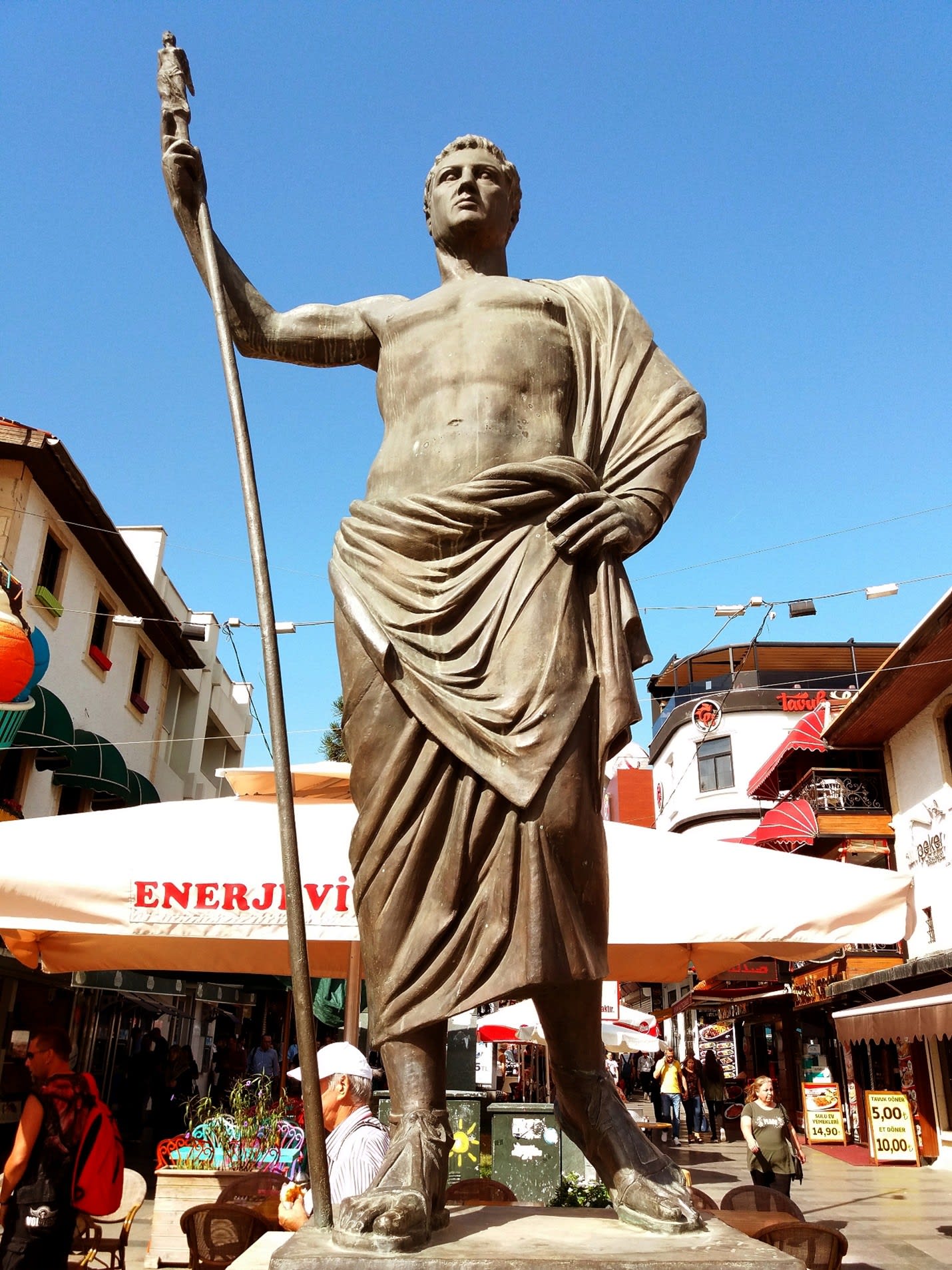
Andriscus unexpectedly found passionate support among the population of the Seleucid kingdom.
A significant portion of the local population had Macedonian roots, and after Rome had crushed Macedonia in the Third Macedonian War, powerful anti-Roman sentiments had spread throughout society.
Support for the pretender grew so intense that mass disturbances erupted in Antioch, the capital of the Seleucid kingdom.
The enraged crowd went so far as to demand the overthrow of King Demetrius himself if he refused to support the supposed “heir of Perseus.”
Demetrius, however, proved to be a pragmatic politician.
Either he did not believe Andriscus’s impressive story or, more likely, he feared the wrath of Rome.
He ordered the pretender arrested and sent him in chains directly to Rome.
In the capital of the Republic, Andriscus was brought before the powerful Roman Senate.
According to Cassius Dio, the senators looked upon him with undisguised contempt.
To them, he was merely a man of low birth, while his claims were nothing more than a cheap fabrication.
The Romans also possessed a powerful argument: they knew perfectly well that the real Philip, son of Perseus, had died in the Italian town of Alba Fucens only two years after the death of his father.
Considering the impostor a completely harmless madman, the Senate did not even bother to execute him.
Instead, Andriscus was simply exiled to an Italian town.
The Romans had fatally underestimated him.
Andriscus managed to stage a daring escape.
Leaving Italy, he returned to Greece and arrived in Miletus, where he resumed spreading stories of his royal ancestry with even greater energy.
His speeches quickly attracted the attention and sympathy of the local population.
Alarmed by his activities, the authorities of Miletus arrested the agitator and asked Roman envoys then present in the city for instructions.
But the Romans, blinded by arrogance, once again treated him with contempt and advised the local authorities simply to release him.
Once free, Andriscus traveled throughout Ionia, deliberately seeking out former acquaintances of King Perseus.
His greatest diplomatic success came through his meeting with Callippa, a former concubine of Perseus who had by then become the wife of Athenaeus, the brother of King Attalus II Philadelphus of Pergamon.
Callippa, Macedonian by origin and remembering her former ties to the Antigonid dynasty, accepted Andriscus’s claim.
She not only gave him a considerable amount of money and several slaves, but also offered him a piece of advice that would change the course of his life: he should go to Thrace, where he might be able to raise a real army.
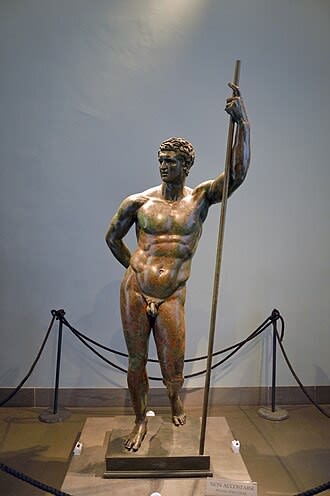
The pretender’s journey took him through Byzantium, where he also received a favorable reception, and eventually to the court of the Thracian ruler Teres III.
The choice was excellent.
Teres was the son of Cotys IV, a former loyal ally of Perseus, and was married to a granddaughter of the late Macedonian king.
Teres and other influential Thracian chiefs, among whom a certain Barsabas was particularly prominent, enthusiastically supported the supposed “son of Perseus.”
It was in Thrace, at the court of Teres, that the long-awaited coronation ceremony finally took place.
With several hundred fierce Thracian warriors under his command, Andriscus began his great military campaign.
His first attempt to invade Macedonia ended in failure.
The local population initially reacted rather coldly to the pretender, which further convinced Rome that the entire enterprise was harmless.
Soon, however, the winds of history changed.
Andriscus encountered the militia of the Macedonian republics that remained dependent upon Rome and crushed them in the region of Odomantice.
Encouraged by his first success, he crossed the River Strymon, carrying the war directly into Macedonian territory, where he won a second brilliant victory over pro-Roman forces.
These military triumphs transformed the situation completely.
Andriscus’s popularity soared.
In 150 or 149 BC, he entered the ancient capital of Pella in triumph and formally proclaimed himself King of Macedonia.
Despite their initial skepticism, Macedonians now began joining him in large numbers.
The reason was not merely his military victories, but also deeply rooted hatred of Roman domination.
As the historian Benedict Niese perceptively observed:
“People readily believed what they wished to believe; the restoration of Macedonia meant liberation from the burden of Roman rule. The longer that burden had to be endured, the more joyfully the Macedonians welcomed the prospect of restoring the monarchy of the old dynasty.”
Enthusiasm among the lower classes was immense, although the aristocracy regarded the new monarch with much greater caution.
For many skeptics, the decisive argument was Andriscus’s ability to identify correctly the locations of the two hidden treasures supposedly revealed to him in Perseus’s “sealed letter.”
Some modern scholars, however, believe that support for Andriscus was never absolute.
A significant portion of the population may secretly have maintained pro-republican sympathies. This may be indirectly reflected in Rome’s comparatively moderate treatment of Macedonia after the rebellion was defeated, especially when contrasted with the brutal destruction of Corinth and Carthage during the same historical period.
The reign of Andriscus became an age of uninterrupted war.
Having secured the throne, he dramatically expanded his army and launched a campaign to conquer Thessaly, a strategically vital region that had once formed part of the Antigonid kingdom.
At first he faced only scattered forces of Roman allies, a handful of legates, and the remains of the pro-Roman Macedonian republics.
When Rome finally realized that the situation was slipping out of control, it sent regular troops — a legion commanded by the praetor Publius Juventius Thalna.
Thalna, however, made a fatal mistake: he catastrophically underestimated the scale of Andriscus’s rapidly expanding royal army.
Andriscus launched a sudden attack on the Romans in Thessaly. Cassius Dio states only that the battle took place “near the borders of Macedonia.”
In the fierce engagement that followed, the Roman legion was almost completely annihilated, while the praetor Thalna himself was killed.
It became one of the most humiliating defeats Roman forces had ever suffered at Macedonian hands.
The Roman historian Florus later wrote with bitter irony that Romans who had remained undefeated against genuine kings had now been defeated by an “imaginary and pretended king.”
This magnificent victory raised Andriscus to the height of his power.
He completed the conquest of Thessaly and ruthlessly crushed what remained of internal pro-republican opposition.
Recognizing that Rome would never acknowledge his legitimacy, the king adopted a firmly anti-Roman foreign policy.
He strengthened his ties with his loyal Thracian allies, who continued supplying him with manpower.
Furthermore, Andriscus concluded a strategic alliance with Carthage, which at that moment was fighting desperately for survival during the Third Punic War.
The Carthaginians promised to send money and naval assistance, but unfortunately for Andriscus, this support never arrived in time.
Sympathy for the Macedonian rebel was also spreading throughout Greece.
The Achaean League and King Attalus II Philadelphus of Pergamon, however, remained steadfast allies of Rome, terrified by the possibility that a powerful Macedonia might re-emerge.
The domestic policies of the new monarch were marked by extreme severity.
Ancient historians unanimously condemned him as a cruel tyrant.
Modern scholars, however, suggest that these descriptions may partly reflect Andriscus’s ruthless repression of his political enemies — pro-Roman collaborators and republican supporters.
Nevertheless, after the destruction of Thalna’s legion, the machinery of terror appears to have intensified to such an extent that the king rapidly began losing the very popular support that had carried him to the throne.
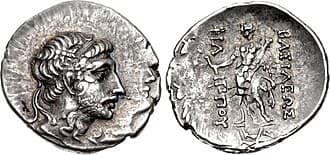
The economic conditions of Andriscus’s short reign are reflected in his few surviving coins.
The desperate need for money to finance endless warfare forced him to overstrike older Antigonid and republican coinage, and even Roman denarii — possibly trophies captured after his victory over Thalna.
Only three silver drachms issued by Andriscus have survived.
They depict him in the traditional style of a Hellenistic monarch, while the reverse bears the profile of Heracles.
Two of these coins were clearly overstruck: one over a drachm of the Thessalian League and another over a Roman denarius.
The quality of the minting was poor because of haste and the reuse of old dies.
Interestingly, coins without royal symbols continued to circulate during the same period, perhaps suggesting that Andriscus was pragmatic enough to allow loyal communities to retain the right to issue their own currency.
The fall of Andriscus came swiftly.
The destruction of Praetor Thalna’s army was a humiliating blow to Roman prestige, and the Senate finally understood the magnitude of the threat.
In 148 BC, a full army of vengeance arrived in Greece — two elite Roman legions commanded by the praetor Quintus Caecilius Metellus.
The Romans advanced with chilling methodical precision.
Metellus moved along the Thessalian coast by both land and sea, while an allied Pergamene fleet struck the northern coastal regions of Macedonia.
Caught between these forces, Andriscus withdrew toward Pydna, where he established a defensive position.
It was there, on the fields already famous for the earlier Battle of Pydna, that his army was destroyed.
His repression and tyranny now had consequences.
After the first major defeat, the Macedonians abandoned their ruler, and large numbers surrendered to Metellus.
Andriscus fled back to where his rise had begun — Thrace.
He attempted to raise a new army, but Metellus pursued him relentlessly.
The Romans caught and defeated the pretender’s still incomplete force.
Desperate, Andriscus sought refuge with a Thracian ruler named Byzes.
Roman diplomacy, however, proved stronger than honor.
Metellus either bribed or intimidated Byzes, who handed Andriscus over to the Romans in chains.
Thus ended, in disgrace, the reign of the last king of Macedonia.
For two years Andriscus remained a prisoner while Metellus systematically eliminated the final centers of resistance, transformed Macedonia into a Roman province, and crushed the Greeks during the Achaean War.
In 146 BC, Quintus Caecilius Metellus entered Rome in triumph and received the honorary cognomen Macedonicus.
The centerpiece of his triumphal procession was Andriscus himself, bound in heavy chains and paraded through the streets of the Eternal City.
Afterward, he was executed.
The personality of Andriscus remained a target of hatred among ancient chroniclers.
Diodorus Siculus described him as a monster “filled with cruelty, greed, and every kind of base quality,” while Livy and Cassius Dio despised him for his supposedly “low birth.”
Yet the historical consequences of his rebellion were enormous.
The Roman Senate learned through bitter experience that the experiment with supposedly “independent republics” in Macedonia had come to an end.
The extraordinary scale of the anti-Roman uprising, combined with the destruction of the old administrative system and the physical elimination of much of the pro-Roman elite during Andriscus’s repression, left Rome with no practical alternative.
Restoring the previous arrangement was impossible.
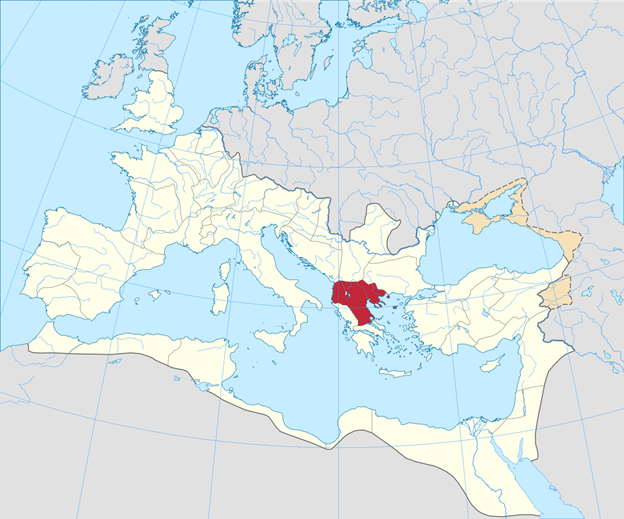
As a result, Macedonia permanently lost even the illusion of independence and became a fully incorporated Roman province.
Its first governor was the very same Quintus Caecilius Metellus Macedonicus, the man who brought the bloody history of the Macedonian kings to its final conclusion.