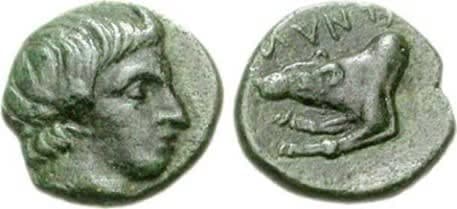
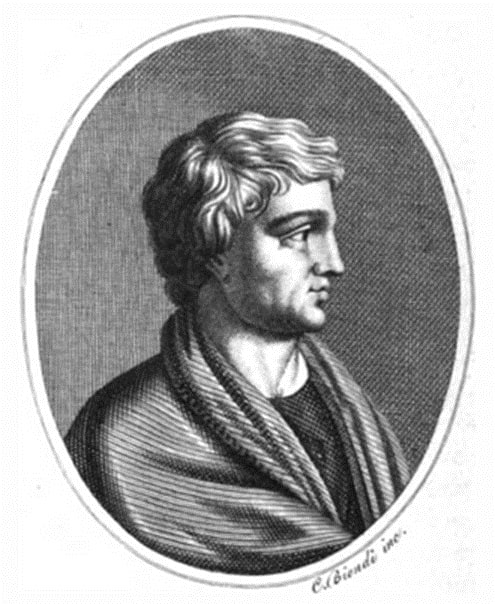
The figure of Amyntas II is so elusive that the authoritative ancient historian Diodorus Siculus simply omitted him when listing the rulers of Macedonia. Had it not been for the works of Late Antique and Byzantine chronographers — Eusebius of Caesarea and George Syncellus — this king might have disappeared from the historical record altogether.
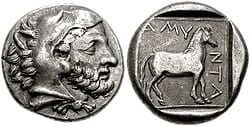
It is generally believed that these authors drew their information from the now-lost works of the historian Theopompus. Modern scholarship, however, ultimately settled the debate over whether Amyntas II truly existed: numismatic evidence provided irrefutable proof. Coins bearing his name demonstrated that he was not a fictional figure, but a real Macedonian ruler.
The ancestry of Amyntas remains a subject of academic debate.
One point is beyond doubt: Argead blood flowed in his veins. According to the most widespread and well-supported theory, he was the son of Menelaus and therefore the grandson of the famous King Alexander I Philhellene.
An alternative hypothesis suggests that Amyntas may instead have been a son of King Archelaus.
The confusion is further complicated by the fact that ancient chroniclers frequently identified him with another Amyntas — Amyntas III, who would ascend the throne only about a year after the death of Amyntas II.
Amyntas II’s path to supreme power is shrouded in obscurity, broken only by a few scandalous accounts preserved by ancient authors.
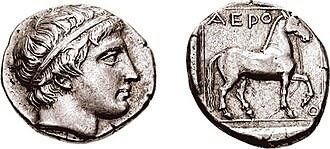
Claudius Aelian, in his work Varia Historia, left a particularly contemptuous description, claiming that before becoming king Amyntas had been a “servant and slave of Aeropus,” the powerful regent and king who had ruled Macedonia before him.
Amyntas appears to have belonged to the closest circle surrounding Aeropus II and may even have been his officially designated heir.
As a junior partner or dependent under such a powerful ruler, Amyntas naturally occupied a subordinate position. This relationship was later maliciously distorted by Aelian and transformed into the metaphor of “slavery.”
The reign of Amyntas II was extremely brief.
He held the crown for only about a year, becoming a transitional figure between the death of Aeropus II and the accession of Aeropus’s son, Pausanias.
Determining the precise chronology of this short reign has become an exceptionally difficult problem for historians.
Different scholarly traditions propose several possible dates: 395–394 BC, 394–393 BC, around 393 BC, or 393–392 BC.
The end of the brief reign of Amyntas “the Younger” proved as inglorious as it was scandalous.
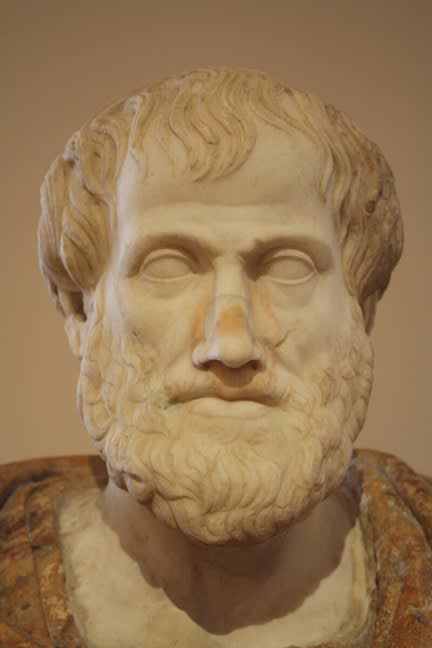
The great philosopher Aristotle preserved for posterity a strikingly personal detail concerning his death:
“Amyntas the Younger was killed by Derdas because he boasted of having had a love affair with him when Derdas was a young man.”
Yet behind this story of wounded pride and revenge rooted in passion lies a much deeper political context.
The name Derdas was far from accidental. It was a dynastic name extremely common among the highest aristocracy of Elimea, an autonomous and notoriously independent region of Upper Macedonia. History records at least three Elimeian rulers bearing this name.
Modern historians therefore see Aristotle’s account not simply as evidence of a private act of violence, but as an indication of a much broader political conspiracy.
It appears that members of the Elimeian aristocracy, seeking to weaken central authority at Aegae, exploited Derdas’s personal conflict with the king as a convenient pretext for removing Amyntas II from power.
Although Amyntas II appeared on the historical stage only for a brief moment, his bloodline may have continued to influence the fate of Macedonia.
According to one particularly plausible theory, his son was Ptolemy of Aloros.
This man would later play an enormous role in Macedonia’s violent struggle for power. Ptolemy would become the son-in-law of the very Amyntas III who succeeded to the throne soon afterward, then serve as the powerful regent for the young King Perdiccas III, and eventually assume royal power himself.
Thus, despite the brevity of his reign, the contempt shown toward him by ancient chroniclers, and his mysterious death at the hands of a former lover, Amyntas II remained an integral link in the chain of the Argead dynasty — the royal house that would soon conquer virtually the entire known world.


