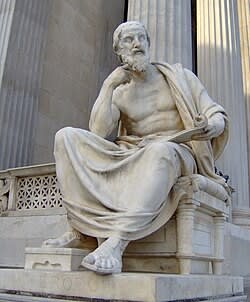
Alexander was born during one of the most consequential periods of antiquity — approximately between 530 and 527 BC. He belonged to the Argead, or Temenid, dynasty, whose lineage, according to tradition, could be traced back to Heracles himself. Herodotus, who personally visited Macedonia, recorded the legend of three exiled brothers from Argos, the youngest of whom, Perdiccas, became the founder of the kingdom at the foot of Mount Bermion. Alexander was considered a seventh-generation descendant of this legendary hero.

Although modern historians regard this genealogy as a skillful political construction designed to legitimize the Macedonian kings’ claims to Hellenic origins, Alexander himself appears to have regarded this connection as sacred. Interestingly, after his death the official version of the dynasty’s origins was expanded to include the names of Archelaus and Caranus, but during Alexander’s lifetime his only indisputable historical ancestor was his father — King Amyntas I.

Alexander’s first serious trials as a statesman began in the late 510s BC, when the forces of the Persian commander Megabazus approached the Macedonian frontiers. Amyntas I, realistically assessing the balance of power, acknowledged the authority of Darius I, the “King of Kings,” and presented the Persians with “earth and water.”
A famous legend later developed around this submission, often described as the “banquet incident.” According to the story, seven Persian envoys became drunk and began insulting Macedonian women. The young Alexander, unwilling to tolerate the humiliation of his household, supposedly dressed young Macedonian men in women’s clothing and had them kill the envoys during the feast.
To conceal the incident, the Macedonians were allegedly forced to bribe Bubares, the head of the Persian investigative commission, by giving him Alexander’s sister Gygaea in marriage. Although modern scholars generally regard this episode as later propaganda, it vividly illustrates Macedonia’s ambiguous political position.

Alexander ascended the throne sometime between 500 and 495 BC. Eusebius of Caesarea gives the precise date as 498 BC. His accession coincided with the Ionian Revolt of the Greeks against Persia, which gave Macedonia a brief period of relief while the attention of the great empire was focused on Asia Minor.
One of the defining moments of Alexander’s life was his participation in the Olympic Games. This was not merely an athletic achievement, but an act of political recognition.
When Alexander expressed his desire to compete in a footrace — or, according to another tradition, in the pankration — other competitors protested, calling him a “barbarian.”
The Macedonian king was forced to appear before the judges, the Hellanodikai, and prove his descent from Argos. The judges accepted his arguments and officially recognized Alexander as a Hellene.
This probably occurred in 496 BC. Herodotus states that Alexander reached the finish line at the same time as the winner. This triumph later allowed him to claim the status of a legitimate participant in the affairs of the wider Greek world.
During the great conflict between the Greeks and the Persian Empire, Alexander I pursued an extraordinarily complex diplomatic strategy.
On the one hand, he remained a vassal of Xerxes. During the Persian invasion of 480 BC, Alexander was present in the entourage of the Persian king and even assisted him in establishing administrative control over loyal Greek cities in Boeotia.
Moreover, through the assistance of his brother-in-law Bubares, Xerxes expanded Alexander’s territories, granting him control over lands between Mount Olympus and Mount Haemus.
Yet behind this façade of submission, Alexander was building secret alliances with the Greeks.
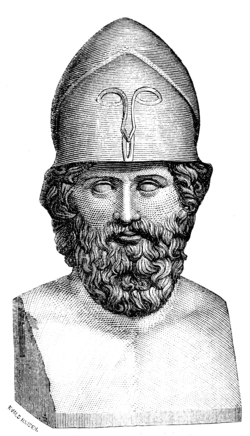
Even before Xerxes’ invasion, Alexander supplied Athens with strategically important timber for the fleet of Themistocles.
For his services, he received the honorary titles of “benefactor of the city” and “proxenos”, or official guest-friend, of the Athenians.
In the Vale of Tempe, he warned the Greeks about a Persian route that could have allowed the enemy to outflank them, thereby preventing their encirclement.
On the eve of the Battle of Plataea in 479 BC, according to tradition, Alexander personally made his way to the Greek positions to inform them of the plans of the Persian commander Mardonius.

Even Alexander’s embassy to Athens in the spring of 479 BC, sent on behalf of Mardonius with an offer of a separate peace, can be interpreted in two ways: either as the fulfillment of his overlord’s orders or as an attempt to warn his Greek friends that another Persian attack was inevitable.
After the defeat of the Persians and their withdrawal from Europe, Alexander entered a “golden age” of territorial expansion.
Taking advantage of the chaos and the retreat of his enemies, he began aggressively integrating neighboring territories into his kingdom.
In the east: he occupied the region of Crestonia and part of Chalcidice, and seized Mount Dysoron, rich in silver and previously controlled by the Bisaltae.
In the west: he expelled the Eordaeans and began subordinating the tribes of Upper Macedonia, including Elimea and Lyncestis, although their complete integration would take several more decades.
In the south: he consolidated Macedonian control over the coastal region of Pieria.
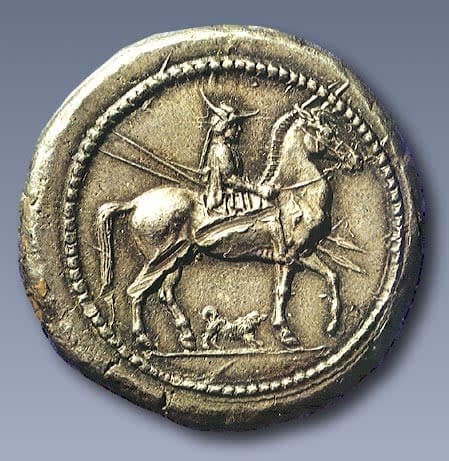
Control of the silver mines allowed Alexander to begin minting his own coinage — the famous octadrachms.
These were among the first European coins to bear the name of a ruler. They became a powerful instrument of political propaganda, proclaiming the wealth and sovereignty of the Macedonian king.

Alexander understood that the strength of a state depended not only on military power, but also on culture and organization.
He actively invited prominent figures from the Greek world to his court, including the great lyric poet Pindar and the “Father of History,” Herodotus.
According to one theory, Alexander also began the process of transferring the capital from ancient Aegae to the more defensible city of Pella, although most historians attribute this move to his successors.

In military affairs, Alexander is sometimes credited with creating the cavalry of the hetairoi, or “Companions,” and with establishing a more organized infantry force, thereby laying the foundations for the future Macedonian phalanx. These reforms, however, would only be fully developed much later under Philip II.
The end of Alexander’s reign is surrounded by mystery.
During the final years of his rule, in the 460s BC, relations with Athens deteriorated because of disputes over crossings of the River Strymon.
The Athenian general Cimon was even accused of having refrained from attacking Macedonia only because Alexander had bribed him.
The date of Alexander’s death varies between the sources.
The Parian Chronicle places it in 461–460 BC, while modern scholars more commonly favor 454 BC, or possibly even 452 BC.
The circumstances of his death are equally obscure. A remark attributed to the commander Philotas in the works of Curtius Rufus may suggest that Alexander fell victim to a conspiracy, sharing the fate of later Macedonian rulers such as Archelaus and Perdiccas.
Alexander I entered history with the epithet “Philhellene,” meaning “Friend of the Greeks.”
His reign marked the period in which Macedonia ceased to be a peripheral geographical curiosity and began to emerge as a significant regional power.
He managed to walk a narrow line between Persian domination and Greek expansionism, preserving the independence of his people while considerably enlarging the territory under Macedonian control.
“He destroyed the gulf that separated Greeks and Macedonians,” wrote the historian Otto Abel.
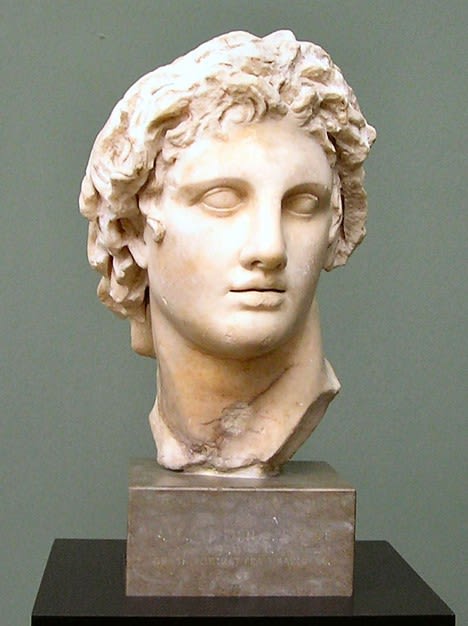
And although Alexander’s policies were often ambiguous and deeply pragmatic, it was Alexander I who created the political and economic foundations upon which the later greatness of Philip II and Alexander the Great would be built.


