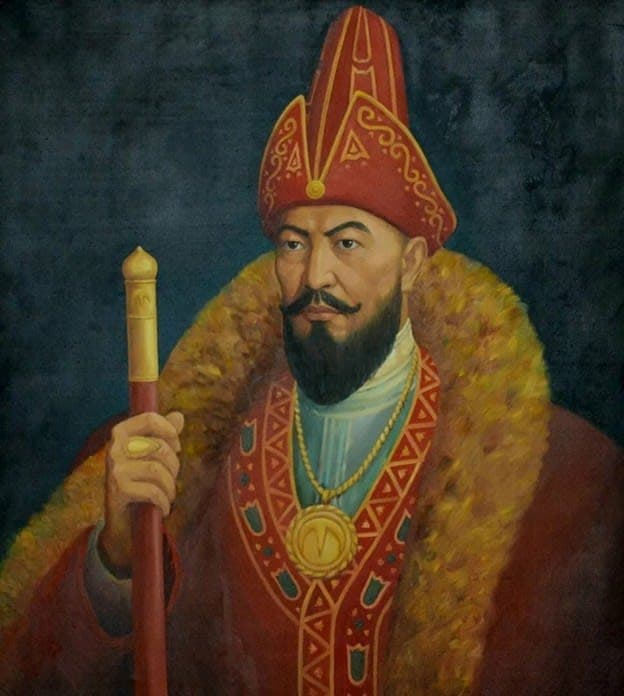
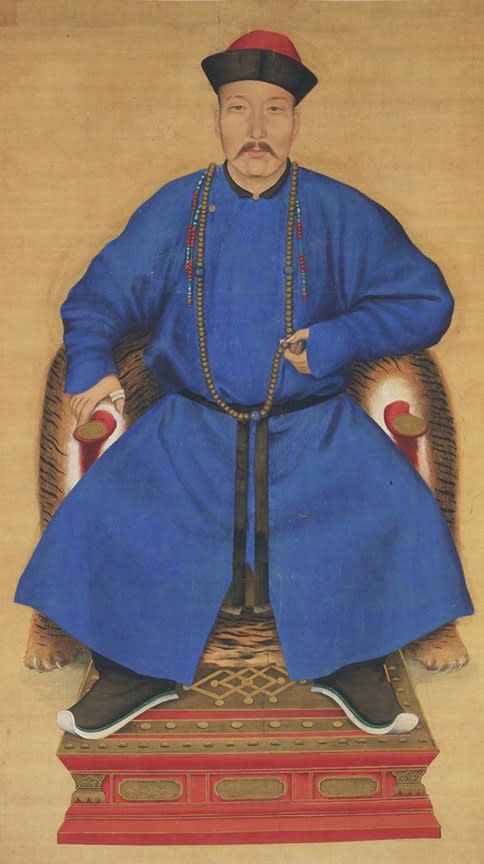
Abylai Khan, born with the name Abilmansur, was one of the most legendary and revered figures in the history of the Kazakh Khanate. His childhood and youth were marked by hardship. After the Oirats captured Tashkent in 1725, the 14-year-old Abilmansur lost his father, Sultan Vali, and was forced to wander the steppe. Concealing his noble origin, he took the name Sabalak (“shaggy/unkempt”) and spent several years working as a hired laborer for a wealthy bai.
Fame came to him suddenly. In 1734, after the death of Khan Sameke, Abilmambet was elected the new khan, and Abilmansur became the military leader. During this period, he gained renown in single combat by defeating the Dzungar noyon Sharysh, and he received his warrior’s name Abylai in honor of his grandfather.
In 1742, during another Dzungar invasion, Abylai Khan tried to organize resistance on the Ishim River, suffered defeat, and was taken prisoner. During his captivity, which lasted about a year, he managed to learn Oirat and possibly Manchu. He became a frequent guest at the court of the Dzungar ruler Galdan Tseren and befriended the legendary noyon Amursana.
In the spring of 1743 Abylai was released, possibly through the mediation of a Russian embassy. Upon his return he began to pursue a sophisticated diplomacy, seeking to maintain relations both with Russia and with the Dzungar Khanate. In a letter to the dowager Kalmyk khansha Darmabala, he called himself her “younger brother,” underscoring his desire for peaceful relations with neighbors.
After Galdan Tseren’s death in 1746, a civil war broke out in Dzungaria, and Abylai used this to strengthen his influence. When the Dzungar noyons Amursana and Dawachi (Dabachi) fled into the Middle Juz, Abylai refused to hand them over, which led to war with the Dzungars.
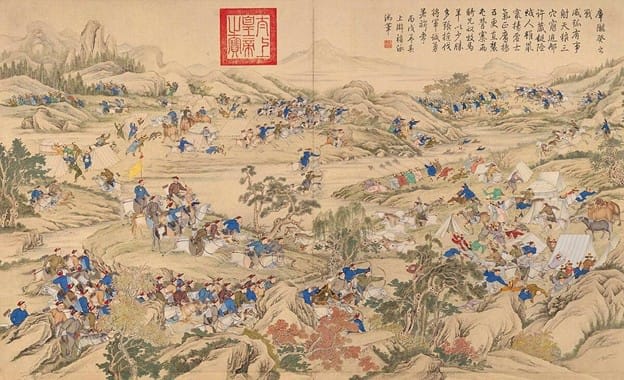
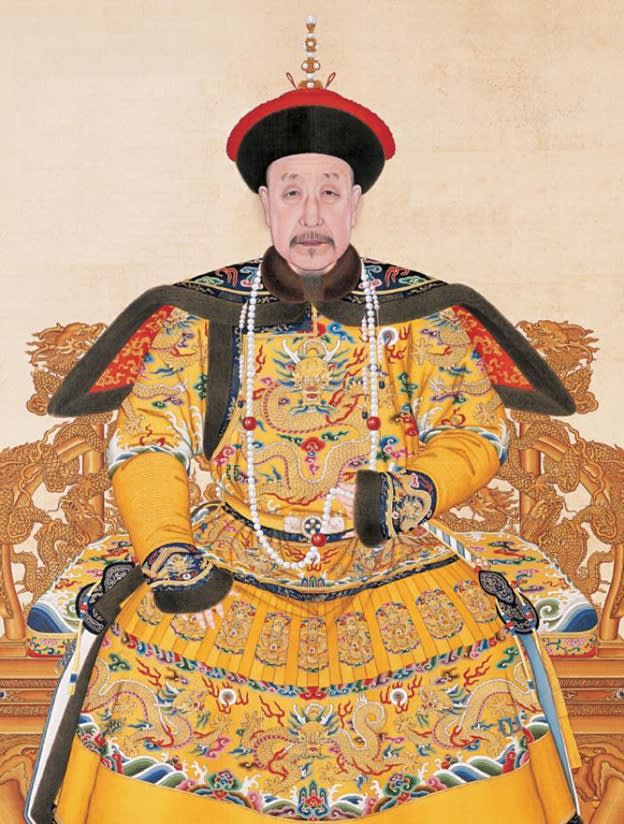
After Dzungaria was conquered by the Qing Empire, Abylai found himself between two great powers—the “lion” (Russia) and the “dragon” (China). He pursued a far-sighted and cunning policy aimed at preserving the independence of his khanate.
In 1756 he was compelled to acknowledge Manchu suzerainty formally, but he did not sever ties with Russia. In 1759 he personally traveled to Beijing, where he swore allegiance to the Qianlong Emperor as a wang (vassal prince). This step allowed him to retain full autonomy in practice and secured for the Kazakhs the right to trade in Chuguchak (Tacheng) and Kulja (Yining). In the same year he sent an embassy to St. Petersburg to reaffirm Russian protection.
In 1771, after the death of Khan Abilmambet, a kurultai in Burabay attended by sultans and clan leaders, including the influential Kazybek biy and Kanai biy elected Abylai the supreme khan. The ceremony took place at the mosque of Khoja Ahmed Yasawi in Turkestan. He extended his authority over the Senior and Junior Juzes, viewing himself as khan of all Kazakhs.


At the same time, he waged active campaigns against raids by the Kyrgyz and the Kokandis, who had seized the strategically important Tashkent. Abylai succeeded in uniting the scattered tribes of the Senior Juz and, in 1766, returned Tashkent to Kazakh control.
During Pugachev’s Rebellion 1773–1775 in Russia, Abylai Khan met with Yemelyan Pugachev, promising him support, while simultaneously negotiating with the Russian government and assuring them of his loyalty. In the end, Empress Catherine II confirmed him as khan only of the Middle Juz—part of Russia’s policy to weaken supreme authority among the Kazakhs. He refused to come to Petropavlovsk to swear the oath and declined the insignia of khanly dignity.
Abylai Khan died in 1781 and was buried in the mausoleum of Khoja Ahmed Yasawi in Turkestan. He had 15 wives and 70 children. His great-grandson was the famed Kazakh scholar Chokan (Shoqan) Valikhanov. In popular memory, Abylai Khan remains a wise ruler and defender whose exploits and campaigns became the subjects of epic tales and musical works.



