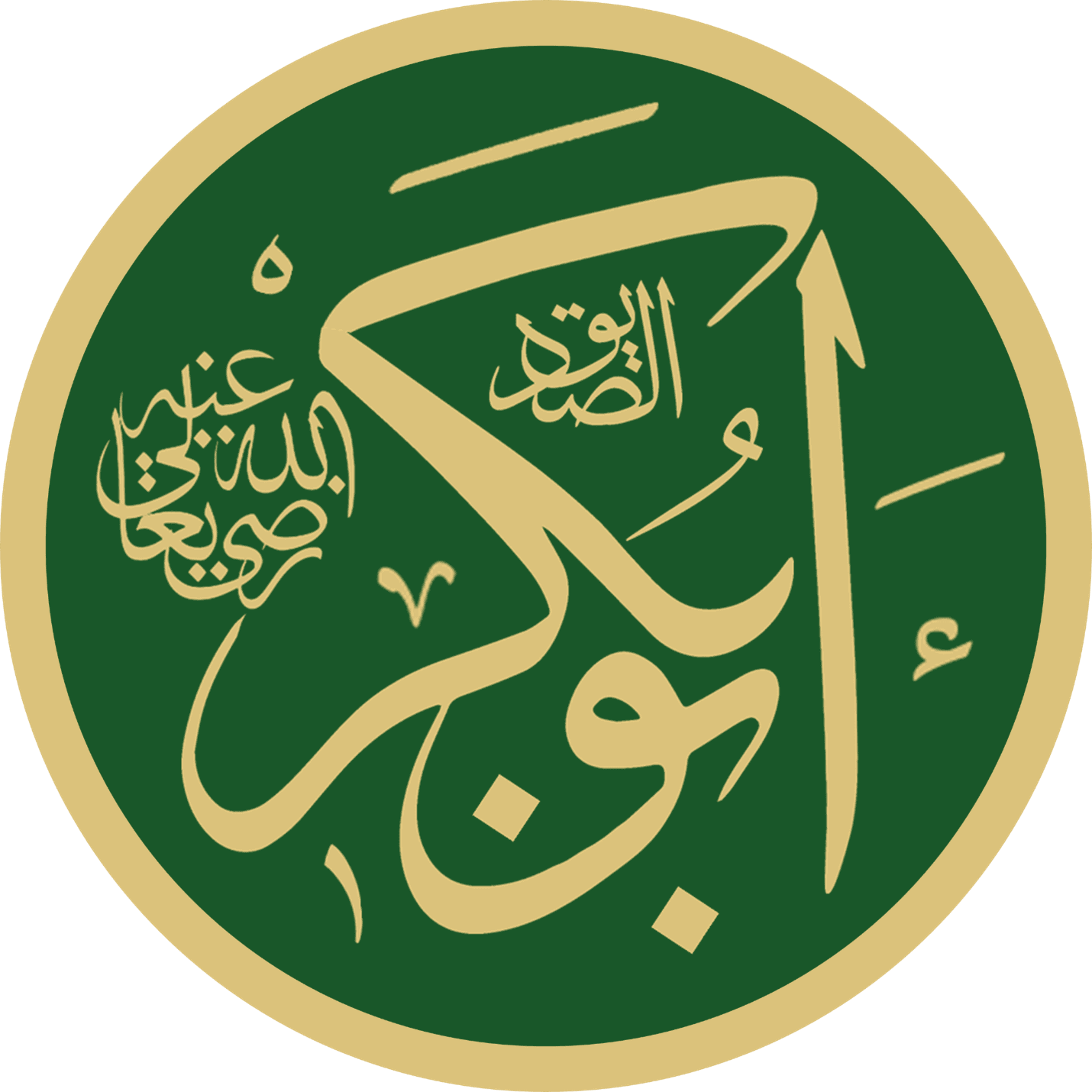
Abu Bakr, born in 573 into the noble family of ʿUthmān (Abu Quḥāfa) and Salmā bint Ṣakhar (Umm al-Khayr), belonged to the influential clan of Banū Taym of the Quraysh tribe. His childhood unfolded within the traditions of the Arab aristocracy of the time: he spent a significant part of it among the Bedouins known as Ahl al-Baʿīr—the “people of camels.” It was precisely his sincere affection for these animals, with whom he played as a child, that earned him the kunya by which he entered history Abu Bakr, meaning “father of the camel calf.”
Raised in affluence, Abu Bakr received an excellent education. He was not merely literate but deeply devoted to poetry, attending the famous annual fairs at ʿUkāẓ, where the finest masters of the word competed. Endowed with a phenomenal memory, he became a recognized expert in the genealogies of Arab tribes, their politics, and their history knowledge that would later make him an invaluable adviser. Yet despite being surrounded by an environment steeped in idolatry, Abu Bakr’s soul inclined toward something else. A tradition has been preserved recounting how, as a child left alone before the idols in the Kaʿba, he implored them for food and clothing; receiving no answer, he hurled a stone at an idol in a burst of disappointment. Until his acceptance of Islam, he remained a ḥanīf—a monotheist—never once bowing his head before man-made deities.


When Muhammad began his prophetic mission, Abu Bakr, being his close friend, became the fourth person to accept the new faith after Khadīja, ʿAlī, and Zayd. He entered the narrow circle of the “twenty-four” Companions who embraced Islam even before the secret gatherings in the house of al-Arqam. As a sign of a new life, he changed his name to ʿAbdullāh (“servant of God”).
Thanks to his gentle character and high standing, Abu Bakr became one of the chief preachers of Islam, bringing into the community such future pillars of the faith as ʿUthmān ibn ʿAffān and Saʿd ibn Abī Waqqāṣ. As a wealthy merchant, Abu Bakr turned his fortune into an instrument for saving fellow believers: he bought the freedom of enslaved Muslims and provided financial support to the community in its hardest times. When the open call began in 613, it was he who first spoke publicly before the Meccans, for which he was brutally beaten by the Quraysh until he lost consciousness. This ordeal became a turning point after it, his mother also accepted Islam.
The culmination of his devotion was the Hijra — the great migration to Medina. It was Abu Bakr who was the sole companion to shelter the Prophet in the Cave of Thawr, risking his life right under the noses of the pursuers.


In Medina, the bond between Muhammad and Abu Bakr grew even stronger; in 624, his daughter ʿĀʾisha became the Prophet’s wife. Abu Bakr took part in all the battles and served as the standard-bearer in the expedition to Tabūk, yet he always remained in the shadow of his teacher, never seeking leadership. His true greatness revealed itself at the moment of the deepest crisis—the death of the Prophet Muhammad in 632. When the community was paralyzed by grief and some refused to believe what had happened, it was Abu Bakr who pronounced the historic words: “Whoever worshipped Muhammad—he has died; but whoever worships Allah—He is Ever-Living.”
After Muhammad’s death, Abu Bakr was elected the first caliph (“successor of the Messenger of Allah”) during tense debates in the quarter of Banū Sāʿida. Despite the objections of the Anṣār and later Shiʿi interpretations regarding ʿAlī’s right to leadership, Abu Bakr managed to preserve the unity of the ummah. He rejected any claims to prophetic status, emphasizing that he was merely an executor of the will of the departed leader.
Abu Bakr’s rule began with the gravest trials. Immediately after Muhammad’s death, rebellions of apostates erupted across Arabia. Yet the newly appointed caliph showed iron resolve: despite the threat to Medina, he dispatched the army of Usāma ibn Zayd toward the Byzantine frontiers, fulfilling the Prophet’s final command.
Soon followed a series of large-scale campaigns known as the Wars of Apostasy (Ridda). Under the caliph’s overall leadership, talented commanders such as Khālid ibn al-Walīd crushed the false prophets Ṭulayḥa and Musaylima. Battles thundered from Yamāma to Yemen, from Oman to Bahrain. In just one year, Abu Bakr achieved the incredible he reunified the scattered and warring tribes of the Arabian Peninsula under the banner of Islam.


Realizing that a united Arabia would become a target for great empires such as Byzantium and the Sassanids, Abu Bakr struck preemptively against both in 633. This marked the beginning of the great Arab conquests, although the caliph himself understood that he was only laying the foundation for his successors.
One of Abu Bakr’s most important achievements was the preservation of the Qur’an. After the deaths of hundreds of reciters (ḥuffāẓ) at the Battle of Yamāma, and at the insistence of ʿUmar ibn al-Khaṭṭāb, the caliph ordered the collection of scattered written records on palm leaves, stones, and pieces of leather into a single text. This work, carried out by Zayd ibn Thābit, formed the basis of the canonical text of the Scripture used by Muslims to this day.
In August 634, Abu Bakr fell gravely ill. Sensing the end, he did not usurp the right to appoint a successor but put ʿUmar’s candidacy to the community for discussion, receiving unanimous support. Before his death, he displayed utmost humility, bequeathing almost all his personal property to the state.
Abu Bakr as-Ṣiddīq died on August 23, 634, at the age of 63 the same age as the Prophet Muhammad. He was buried beside the Prophet’s grave in ʿĀʾisha’s chamber.


