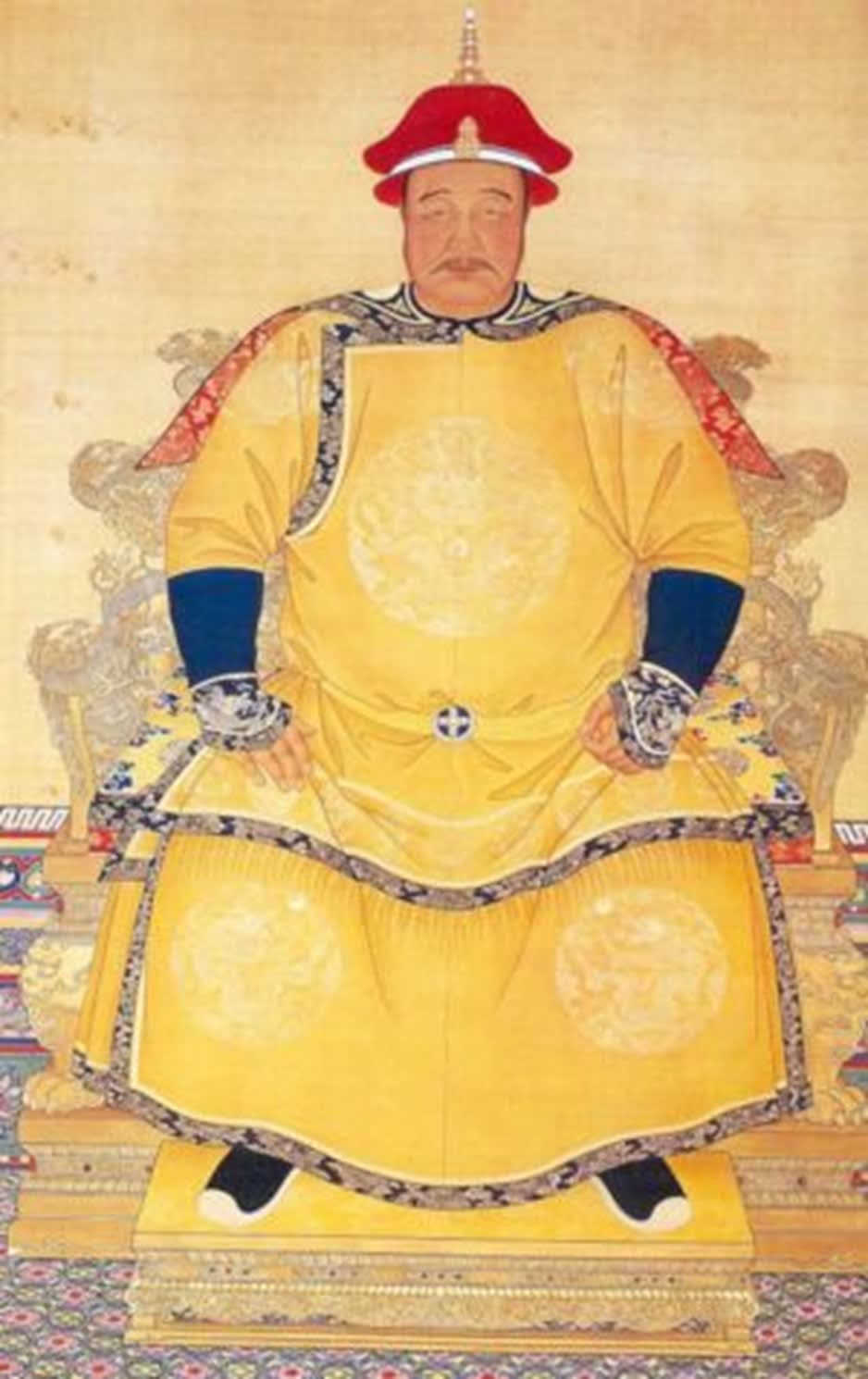

After Nurhaci’s death in 1626, his eighth son, Abahai, inherited the Manchu throne. Taking the title of khan, he continued his father’s work, but on an entirely new level. Unlike Nurhaci, who was primarily a warrior, Abahai later known by his reign name Hong Taiji proved to be a talented statesman and reformer who laid the foundations for the future great empire.
At the time of his accession, Manchuria was already a strong but not yet fully unified state. Abahai continued subjugating independent Jurchen chieftains. Between 1629 and the 1640s, he launched about a dozen campaigns against neighboring tribes, finally consolidating the Manchu lands and bringing northern Manchuria under control.
Realizing that military power alone could not sustain the state, Hong Taiji embarked on extensive reforms. In 1629, he introduced a system of civil service examinations modeled on the Chinese system to select officials and military leaders. He established a Secretariat for administrative affairs and a system of Six Ministries similar to that of China, while appointing many Chinese defectors to key administrative posts. These measures demonstrated Hong Taiji’s intention to adopt the effective administrative practices of the Ming Empire, even as he waged war against it.


Hong Taiji’s foreign policy was both aggressive and successful. He subjugated the Mongol principalities of Khorchin, Naiman, and Aohan, extending his influence over the lands of the Chahar Mongols. In 1627, he launched an unsuccessful campaign against China, but when he later faced Ming support from Korea, he retaliated with a devastating invasion of Korea in 1637. The Korean king was forced to surrender, make peace, pay tribute, and sever all ties with China. This secured the southern borders of the Manchu state.
To bypass the heavily fortified Ming defenses in Liaoxi, Hong Taiji turned toward southern Mongolia. He won over many Mongol rulers by promising them aid in their struggle against Ligdan Khan, who sought to revive the empire of Genghis Khan. In return, the Mongol cavalry joined the Manchus. In 1629, the combined forces bypassed the Liaoxi fortresses from the west, broke through the Great Wall, and appeared before the walls of Beijing, causing panic in the capital. Although Hong Taiji did not besiege the city, he inflicted serious damage on the Ming army and returned with rich spoils. In the following years, Manchu detachments continued to make deep raids into Chinese territory.

One of Hong Taiji’s most important victories was the subjugation of the Mongol people. In 1632, he crushed the Chahars, and after Ligdan Khan died of smallpox in 1634, many Mongol princes voluntarily joined him. They even requested that he assume the title of Bogd Khan (“Great Khan”). After the defeat of the Chahars, Hong Taiji also obtained the imperial seal said to have belonged to the Yuan dynasty, further strengthening his legitimacy.
All these successes led to an epoch-making decision. On May 5, 1636, Hong Taiji gave his state a new name Qing (“Pure”) deliberately contrasting it with the Ming (“Bright”) dynasty of China. He adopted the title of emperor (huangdi), along with its Mongolian equivalent, Bogd Khan, and proclaimed a new reign title: Chongde (“Accumulated Virtue”).
Hong Taiji understood that to conquer China completely, it was necessary to gain control over the coastal region of Liaoxi. After long struggles and heavy losses, his army captured several key fortresses, including Jinzhou. The only major obstacle remaining between him and China was Shanhaiguan.

Meanwhile, China was engulfed in internal turmoil. A massive peasant rebellion led by Li Zicheng swept across the country. In 1643, the rebels captured Beijing, and the last emperor of the Ming dynasty committed suicide. Li Zicheng declared himself the new ruler.
However, the northeastern provinces remained under the control of the experienced Ming general Wu Sangui, who remained loyal to the fallen dynasty. Facing the threat from Li Zicheng, Wu Sangui chose to form an alliance with the Manchus. He opened the Shanhaiguan Pass to Hong Taiji’s army, and together they defeated Li Zicheng’s forces in 1644.

Hong Taiji himself did not live to see the conquest of China, as he died suddenly in 1643. The cause of his death remains debated, giving rise to rumors of poisoning. The throne passed to his six-year-old son Fulin, who ruled under the reign title Shunzhi. Because of his young age, the state was governed by two regents his uncles Dorgon and Jirgalang.
Although Hong Taiji did not live to witness final victory, his political and military reforms, along with the founding of the Qing dynasty, were decisive steps that enabled his successors to achieve the great conquest of China and establish one of the most powerful empires in history.


